Description
One man is dead.
But thousands are his victims.
Can a single murder avenge that of many?
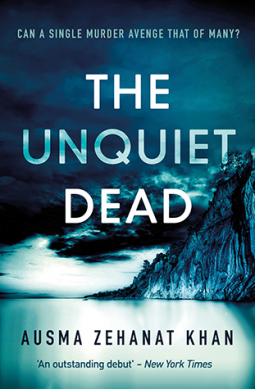
When Christopher Drayton’s body is found at the foot of the Scarborough Bluffs, Detectives Esa Khattak and Rachel Getty are called to investigate his death. But as the secrets of his role in the 1995 Srebrenica Massacre surface, the harrowing significance of the case makes it difficult to remain objective. In a community haunted by the atrocities of war, anyone could be a suspect. And when the victim is a man with far more deaths to his name, could it be that justice has at long last been served?
In this striking debut, Ausma Zehanat Khan has written a compelling and provocative mystery exploring the complexities of identity, loss, and redemption.
One man is dead.
But thousands are his victims.
Can a single murder avenge that of many?
When Christopher Drayton’s body is found at the foot of the Scarborough Bluffs, Detectives Esa Khattak and Rachel...
Description
One man is dead.
But thousands are his victims.
Can a single murder avenge that of many?
When Christopher Drayton’s body is found at the foot of the Scarborough Bluffs, Detectives Esa Khattak and Rachel Getty are called to investigate his death. But as the secrets of his role in the 1995 Srebrenica Massacre surface, the harrowing significance of the case makes it difficult to remain objective. In a community haunted by the atrocities of war, anyone could be a suspect. And when the victim is a man with far more deaths to his name, could it be that justice has at long last been served?
In this striking debut, Ausma Zehanat Khan has written a compelling and provocative mystery exploring the complexities of identity, loss, and redemption.
Advance Praise
'Compelling and hauntingly powerful...anyone looking for an intensely memorable mystery should put this book at the top of their list' - Library Journal
'Khan's stunning debut is a poignant, elegantly written mystery laced with complex characters' - Kirkus Reviews
'A spectacular debut. Khan has written a heartbreaking book that stays with you long after you've put it down'
- Reza Aslan, #1 New York Times bestselling author of Zealot
'Compelling and hauntingly powerful...anyone looking for an intensely memorable mystery should put this book at the top of their list' - Library Journal
'Khan's stunning debut is a poignant, elegantly...
Advance Praise
'Compelling and hauntingly powerful...anyone looking for an intensely memorable mystery should put this book at the top of their list' - Library Journal
'Khan's stunning debut is a poignant, elegantly written mystery laced with complex characters' - Kirkus Reviews
'A spectacular debut. Khan has written a heartbreaking book that stays with you long after you've put it down'
- Reza Aslan, #1 New York Times bestselling author of Zealot
Available Editions
| EDITION | Paperback |
| ISBN | 9781843449447 |
| PRICE | £7.99 (GBP) |
Available on NetGalley
| Send To Kindle (PDF) |
| Download (PDF) |
Featured Reviews
|
My Recommendation
|
|
This is an interesting and eye opening debut. Really thought provoking. At the time of the Bosnian crisis I wrapped up in my own misery and while I know there was an atrocity I remember it mostly as headline news rather than the full details. So as well as a gripping murder mystery I found the book to be so educational. Like WW2 these are war crimes that should never be forgotten and even in fiction it's possible to work towards bringing knowledge. So for that thank you. The storyline itself - a man falls to his death and as there are links to Canadian minorities (Muslim survivors of the above atrocities) Khattak is brought in to dig deeper into the dead mans life when they discover he may not be the mild mannered arts lover his neighbours believed. There are such an array of characters in here. Everyone is unique and there's enough to want to see how they develop in future books especially with each other.. The back stories give us a break for the norm with Khattak as the link to minority groups in Canada and his terrible taste in women! And his partner Rachel Getty still living in an abusive parental household ad yet to really start to live. I found it easy to enjoy these characters despite the bleak storyline and I hope to read more. For me personally two additional new experiences; a Muslim detective (although again despite the storyline the religion is there but doesn't define him. And also Canada. It started a bit slow but soon picked up pace and I managed to read it quite quickly. It's gripping and one of the rare occasions where you really know the victim got what they deserve and do we really care whodunit?? (now there's another thing to think about!) So gripping, complex and thought provoking. An excellent debut |
My Recommendation
|
Louise H, Educator
|
My Recommendation
|
|
At school I hated history!! Then I discovered fiction set during historical events and it opened my eyes to the subject. I was taught in such a boring way, but through stories like this history can be brought to life. Young historians can learn about important events like this. The Unquiet Dead taught me about a period of horrifically recent history, that I didn't know much about. It inspired me to read further into the history of Bosnia. |
My Recommendation
|
Sharon S, Reviewer
|
My Recommendation
|
|
A fantastic book loved reading it and can't wait for next one please write another soon |
My Recommendation
|
|
My Recommendation
|
|
Once again with The Unquiet Dead I have had the privilege of reading a book that defies any simplistic recognition of it being a ‘crime thriller’. Instead what we experience as readers is a searing testimony to the futility and brutality of war, in this instance the violent break up of the former Yugoslavia, and a sensitive and heartfelt portrayal of survivor rage, and guilt. All this is cocooned within the more linear investigation of a suspicious death; a death that reaches back into the turbulent past, but with severe ramifications for those in the present. I am rarely emotionally moved by a book to the degree that I need to sometimes halt and take a breath, and in common with this book, those have been occasioned by novels depicting war and its consequences. Given the emotional reach of this book in terms of its depiction of the genocide and rape that occurred in this conflict, Khan’s prose and imagery of war is beautifully controlled throughout. It is written with a clarity and grace of simplicity that every scene of man’s unconscionable violence towards others hammers straight into the heart of the reader. Taking into account the author’s depth of research, this feeling of discomfort is amplified by the knowledge that these scenes are so firmly grounded in truth. These dreadful events happened, thousands died, and many more live with the physical and mental scarring of having witnessed such tragedy. Alternating between the past and present, the reader remains fully engaged with both timelines throughout, slowly piecing together the incontrovertible truth of history continually reverberating in the present, as all the protagonists experience to some extent. Khan uses this motif not only in those affected by the war, but also other characters who have experienced some form of emotional, marital or familial upset too, so the level of human interest is palpable and certain situations recognisable to the reader too. It’s cleverly done, and merely strengthens the many levels of human relationships and experiences that permeate throughout the book. For reasons that will be become absolutely clear when you read this book for yourselves, I am loath to delve too deeply in this review on some of the characters in this book for fear of giving too much away. Suffice to say, several of them exhibit the best and worst characteristics of the human condition, from quiet dignity to unbelievable greed and hatred. Instead, I would draw your attention to the unique combination of detectives Esa Khattak and Rachel Getty who prove themselves so defined by their differences, but so symbiotic as an investigative team. There’s a wonderful quote from Getty on her taciturn and reserved boss, Khattak, in which she says, “He wasn’t a man who dealt in ultimate truths as she did, he traversed the underground cities of doubt and discrepancy where human frailty revealed itself in layer upon layer of incongruity.” Khattak remains almost unknowable throughout, being both sensitive and prone to introspection, but retaining an aura of quiet determination, despite certain revelations and his involvement in the case at a more personal level. Equally, Getty has an intriguing back story in terms of her family background which unfolds slowly, giving her some personal revelations of her own. She also proves an excellent foil to Khattak with her propensity to cut straight to the chase, and ask the difficult questions at the right time, without fear or favour. I liked both these characters immensely, and the strength of their partnership and very individual personalities that lie at the core of the book. With a slow reveal of historic crimes, emotional wounds and the desire for monetary gain, revenge or closure, this books burns with a unique intensity, that is quite difficult to put into words. As a meditation on war and its aftermath it’s powerful and disturbing, and as a crime thriller on a conventional level it transcends the genre in terms of its emotional reach and characterisation. A difficult, yet thoroughly rewarding read, that will linger in my mind for some time to come. Highly recommended. |
My Recommendation
|
|
My Recommendation
|
|
Harrowing and upsetting, Khan takes an unflinching look at how the horrors of 'ethnic cleansing' in 1990s Bosnia reverberate into the present. Using the structure of a crime novel, she presents us with a disturbing amount of real-life testimony, of guilt confessions from the later war crime hearings, and material from UN reports cleverly woven into her fictional narrative. Her indictment lies not just with the brutal Bosnian Serb militias but also with the UN and the world that allowed these atrocities to take place. Set in Canada, the book also presents us with an intriguing new detective duo in Esa Khattak and Rachel Getty, both with rounded personalities and back-stories, and the potential for development that I hope later books open up in more depth. Both characters avoid cliché (though I felt Rachel's family background was slightly over-loading the book) and there are delicate nuances in their, and other, relationships throughout. Khan's writing is unobtrusive and doesn't get in the way of the huge story she's telling, and the whole book feels like it's been put together with thought, skill, passion, controlled anger, and respect for the people whose story is being told here. Even if I got to the solution ahead of the book (I clearly shared Rachel's early reading matter that gave her the clue!), that doesn't matter here: the novel is so much more than a detective story. Do be aware that there are some very dark scenes here which take us into the heart of the massacres and rape camps that characterised the conflict (genocide?) in Bosnia - but they're never gratuitous, however horrific and hard sometimes to read, and drawn from actual testimony which is meticulously referenced at the end. Both a gripping, emotionally-wrenching novel and a crucial document of what have been designated crimes against humanity, this is stark and brutal but a must-read. |
My Recommendation
|
|
My Recommendation
|
|
This is such an important, impressive book that to try and sum it up in a sentence would be significantly naïve; but the concept my mind kept coming back to as I worked through it was that of complex layers. From the contrasting characteristics of, and the relationship between, Esa Khattak and Rachel Getty; to the measured and intelligent way that Khan has interwoven the history of not just the Srebrenica Massacre, but the horrific atrocities of the wider Bosnian War; The Unquiet Dead is as much a book of our time as any I have ever read. The plot centres on the death of Christopher Drayton, a known and well-liked resident of Scarborough Bluffs in Ontario, Canada. From what seems on the surface to be a straightforward accident, we are introduced to Khattak, Head of the Community Policing Service, for reasons which are initially not entirely clear. With Drayton as the anchoring piece of the puzzle; Esa and his Sergeant Rachel gradually unravel the dark and complex truth surrounding his past, his involvement at Srebrenica, and his death. Detective Esa Khattak and Sergeant Rachel Getty are a well-rounded and intriguing pair. While each shows the utmost respect for the other, the reader is privy to private histories and secrets that they keep hidden, never allowing the other a view into their home lives. For Rachel’s part, her troubled relationship with her parents and her estranged brother create an undercurrent of heightened tension when we are finally allowed to step through the door of the family home with her. Khattak, calm and level-headed throughout his professional duties; harbours a widower’s pain below the surface. Where Khattak maintains (for the most part) a cool, reserved demeanour, Rachel makes no effort to mask her beliefs and thought processes, dealing in hard truths as opposed to the complicated impulses of humanity. “… It was the first time she’d heard Khattak speak with such emotion. He wasn’t a man who dealt in ultimate truths; as she did, he traversed the underground cities of doubt and discrepancy where human frailty revealed itself in layer upon layer of incongruity.” As with all characters in this story, Khattak is a complicated individual; and where we see him falter and are exposed to some of his own flaws; it is Rachel’s voice that both he, and we, hear in response. His religion is an important element of the story, but the fact that he is Muslim is never laboured over, or exploited. The spectre of the Bosnian war is expertly woven into the modern-day narrative, flashbacks mingled with snippets of letters from actual, real-life testimonials of survivors. It is harrowing to consider that the events referred to throughout the book, culminating in the mass killings in ‘safe area’ Srebrenica, were as real as you or I. A significant chunk at the end of the novel is dedicated to all of these references: where they were taken from, whose they are, and where the reader can find out more about the events. A simple and neat ending would not fit a book as complicated as this, and this is not what the reader gets. What we do get, rather, is a contemplative and masterful piece of prose which you’ll reflect on for long after you’re turned the last page. |
My Recommendation
|
Additional Information
Available Editions
| EDITION | Paperback |
| ISBN | 9781843449447 |
| PRICE | £7.99 (GBP) |
Available on NetGalley
| Send To Kindle (PDF) |
| Download (PDF) |
Featured Reviews
|
My Recommendation
|
|
This is an interesting and eye opening debut. Really thought provoking. At the time of the Bosnian crisis I wrapped up in my own misery and while I know there was an atrocity I remember it mostly as headline news rather than the full details. So as well as a gripping murder mystery I found the book to be so educational. Like WW2 these are war crimes that should never be forgotten and even in fiction it's possible to work towards bringing knowledge. So for that thank you. The storyline itself - a man falls to his death and as there are links to Canadian minorities (Muslim survivors of the above atrocities) Khattak is brought in to dig deeper into the dead mans life when they discover he may not be the mild mannered arts lover his neighbours believed. There are such an array of characters in here. Everyone is unique and there's enough to want to see how they develop in future books especially with each other.. The back stories give us a break for the norm with Khattak as the link to minority groups in Canada and his terrible taste in women! And his partner Rachel Getty still living in an abusive parental household ad yet to really start to live. I found it easy to enjoy these characters despite the bleak storyline and I hope to read more. For me personally two additional new experiences; a Muslim detective (although again despite the storyline the religion is there but doesn't define him. And also Canada. It started a bit slow but soon picked up pace and I managed to read it quite quickly. It's gripping and one of the rare occasions where you really know the victim got what they deserve and do we really care whodunit?? (now there's another thing to think about!) So gripping, complex and thought provoking. An excellent debut |
My Recommendation
|
Louise H, Educator
|
My Recommendation
|
|
At school I hated history!! Then I discovered fiction set during historical events and it opened my eyes to the subject. I was taught in such a boring way, but through stories like this history can be brought to life. Young historians can learn about important events like this. The Unquiet Dead taught me about a period of horrifically recent history, that I didn't know much about. It inspired me to read further into the history of Bosnia. |
My Recommendation
|
Sharon S, Reviewer
|
My Recommendation
|
|
A fantastic book loved reading it and can't wait for next one please write another soon |
My Recommendation
|
|
My Recommendation
|
|
Once again with The Unquiet Dead I have had the privilege of reading a book that defies any simplistic recognition of it being a ‘crime thriller’. Instead what we experience as readers is a searing testimony to the futility and brutality of war, in this instance the violent break up of the former Yugoslavia, and a sensitive and heartfelt portrayal of survivor rage, and guilt. All this is cocooned within the more linear investigation of a suspicious death; a death that reaches back into the turbulent past, but with severe ramifications for those in the present. I am rarely emotionally moved by a book to the degree that I need to sometimes halt and take a breath, and in common with this book, those have been occasioned by novels depicting war and its consequences. Given the emotional reach of this book in terms of its depiction of the genocide and rape that occurred in this conflict, Khan’s prose and imagery of war is beautifully controlled throughout. It is written with a clarity and grace of simplicity that every scene of man’s unconscionable violence towards others hammers straight into the heart of the reader. Taking into account the author’s depth of research, this feeling of discomfort is amplified by the knowledge that these scenes are so firmly grounded in truth. These dreadful events happened, thousands died, and many more live with the physical and mental scarring of having witnessed such tragedy. Alternating between the past and present, the reader remains fully engaged with both timelines throughout, slowly piecing together the incontrovertible truth of history continually reverberating in the present, as all the protagonists experience to some extent. Khan uses this motif not only in those affected by the war, but also other characters who have experienced some form of emotional, marital or familial upset too, so the level of human interest is palpable and certain situations recognisable to the reader too. It’s cleverly done, and merely strengthens the many levels of human relationships and experiences that permeate throughout the book. For reasons that will be become absolutely clear when you read this book for yourselves, I am loath to delve too deeply in this review on some of the characters in this book for fear of giving too much away. Suffice to say, several of them exhibit the best and worst characteristics of the human condition, from quiet dignity to unbelievable greed and hatred. Instead, I would draw your attention to the unique combination of detectives Esa Khattak and Rachel Getty who prove themselves so defined by their differences, but so symbiotic as an investigative team. There’s a wonderful quote from Getty on her taciturn and reserved boss, Khattak, in which she says, “He wasn’t a man who dealt in ultimate truths as she did, he traversed the underground cities of doubt and discrepancy where human frailty revealed itself in layer upon layer of incongruity.” Khattak remains almost unknowable throughout, being both sensitive and prone to introspection, but retaining an aura of quiet determination, despite certain revelations and his involvement in the case at a more personal level. Equally, Getty has an intriguing back story in terms of her family background which unfolds slowly, giving her some personal revelations of her own. She also proves an excellent foil to Khattak with her propensity to cut straight to the chase, and ask the difficult questions at the right time, without fear or favour. I liked both these characters immensely, and the strength of their partnership and very individual personalities that lie at the core of the book. With a slow reveal of historic crimes, emotional wounds and the desire for monetary gain, revenge or closure, this books burns with a unique intensity, that is quite difficult to put into words. As a meditation on war and its aftermath it’s powerful and disturbing, and as a crime thriller on a conventional level it transcends the genre in terms of its emotional reach and characterisation. A difficult, yet thoroughly rewarding read, that will linger in my mind for some time to come. Highly recommended. |
My Recommendation
|
|
My Recommendation
|
|
Harrowing and upsetting, Khan takes an unflinching look at how the horrors of 'ethnic cleansing' in 1990s Bosnia reverberate into the present. Using the structure of a crime novel, she presents us with a disturbing amount of real-life testimony, of guilt confessions from the later war crime hearings, and material from UN reports cleverly woven into her fictional narrative. Her indictment lies not just with the brutal Bosnian Serb militias but also with the UN and the world that allowed these atrocities to take place. Set in Canada, the book also presents us with an intriguing new detective duo in Esa Khattak and Rachel Getty, both with rounded personalities and back-stories, and the potential for development that I hope later books open up in more depth. Both characters avoid cliché (though I felt Rachel's family background was slightly over-loading the book) and there are delicate nuances in their, and other, relationships throughout. Khan's writing is unobtrusive and doesn't get in the way of the huge story she's telling, and the whole book feels like it's been put together with thought, skill, passion, controlled anger, and respect for the people whose story is being told here. Even if I got to the solution ahead of the book (I clearly shared Rachel's early reading matter that gave her the clue!), that doesn't matter here: the novel is so much more than a detective story. Do be aware that there are some very dark scenes here which take us into the heart of the massacres and rape camps that characterised the conflict (genocide?) in Bosnia - but they're never gratuitous, however horrific and hard sometimes to read, and drawn from actual testimony which is meticulously referenced at the end. Both a gripping, emotionally-wrenching novel and a crucial document of what have been designated crimes against humanity, this is stark and brutal but a must-read. |
My Recommendation
|
|
My Recommendation
|
|
This is such an important, impressive book that to try and sum it up in a sentence would be significantly naïve; but the concept my mind kept coming back to as I worked through it was that of complex layers. From the contrasting characteristics of, and the relationship between, Esa Khattak and Rachel Getty; to the measured and intelligent way that Khan has interwoven the history of not just the Srebrenica Massacre, but the horrific atrocities of the wider Bosnian War; The Unquiet Dead is as much a book of our time as any I have ever read. The plot centres on the death of Christopher Drayton, a known and well-liked resident of Scarborough Bluffs in Ontario, Canada. From what seems on the surface to be a straightforward accident, we are introduced to Khattak, Head of the Community Policing Service, for reasons which are initially not entirely clear. With Drayton as the anchoring piece of the puzzle; Esa and his Sergeant Rachel gradually unravel the dark and complex truth surrounding his past, his involvement at Srebrenica, and his death. Detective Esa Khattak and Sergeant Rachel Getty are a well-rounded and intriguing pair. While each shows the utmost respect for the other, the reader is privy to private histories and secrets that they keep hidden, never allowing the other a view into their home lives. For Rachel’s part, her troubled relationship with her parents and her estranged brother create an undercurrent of heightened tension when we are finally allowed to step through the door of the family home with her. Khattak, calm and level-headed throughout his professional duties; harbours a widower’s pain below the surface. Where Khattak maintains (for the most part) a cool, reserved demeanour, Rachel makes no effort to mask her beliefs and thought processes, dealing in hard truths as opposed to the complicated impulses of humanity. “… It was the first time she’d heard Khattak speak with such emotion. He wasn’t a man who dealt in ultimate truths; as she did, he traversed the underground cities of doubt and discrepancy where human frailty revealed itself in layer upon layer of incongruity.” As with all characters in this story, Khattak is a complicated individual; and where we see him falter and are exposed to some of his own flaws; it is Rachel’s voice that both he, and we, hear in response. His religion is an important element of the story, but the fact that he is Muslim is never laboured over, or exploited. The spectre of the Bosnian war is expertly woven into the modern-day narrative, flashbacks mingled with snippets of letters from actual, real-life testimonials of survivors. It is harrowing to consider that the events referred to throughout the book, culminating in the mass killings in ‘safe area’ Srebrenica, were as real as you or I. A significant chunk at the end of the novel is dedicated to all of these references: where they were taken from, whose they are, and where the reader can find out more about the events. A simple and neat ending would not fit a book as complicated as this, and this is not what the reader gets. What we do get, rather, is a contemplative and masterful piece of prose which you’ll reflect on for long after you’re turned the last page. |
My Recommendation
|