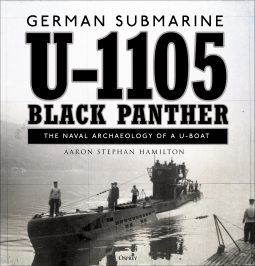
German submarine U-1105 'Black Panther'
The naval archaeology of a U-boat
This title was previously available on NetGalley and is now archived.
Send NetGalley books directly to your Kindle or Kindle app
1
To read on a Kindle or Kindle app, please add kindle@netgalley.com as an approved email address to receive files in your Amazon account. Click here for step-by-step instructions.
2
Also find your Kindle email address within your Amazon account, and enter it here.
Pub Date 18 Jun 2019 | Archive Date 2 Jun 2019
Talking about this book? Use #GermanSubmarineU1105BlackPanther #NetGalley. More hashtag tips!
Description
A detailed study of history and marine archaeology of an innovative late-World War II U-boat that currently lies as a wreck in the Potomac River.
Now in its final resting place at the bottom of the Potomac River in Maryland, the U-Boat U-1105 is unique among German World War II submarines. Technologically innovative, it was the only U-Boat to conduct a wartime patrol while equipped with the snorkel, GHG Balkon passive sonar and a rubberized coating known as Alberich designed to reduce its acoustic signature and hide from Allied sonar. After the end of World War II, it was the subject of instense testing and evaluation by the Allies, before finally being sunk to the bottom of the Potomac River.
This highly illustrated book uses many new and previously unpublished images to tell the full story of this remarkable U-Boat, evaluating the effectiveness of its late war technologies, document its extensive postwar testing and detail all the features still present on the wreck site today.
Available Editions
| EDITION | Other Format |
| ISBN | 9781472835819 |
| PRICE | $35.00 (USD) |
| PAGES | 128 |
Available to Buy
Buy on Amazon Buy on Bookshop.org Buy on WaterstonesAverage rating from 3 members
Readers who liked this book also liked:





Shari LaRosa
Children's Fiction, Children's Nonfiction, Parenting, Families, Relationships