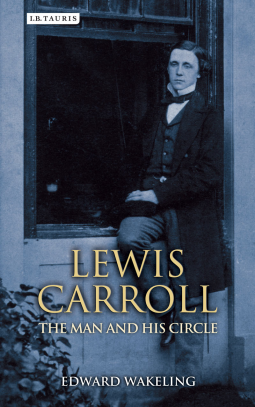
Lewis Carroll
The Man and his Circle
by Edward Wakeling
Pub Date 30 Jan 2015
Description
Ahead of the 150th anniversary of Alice’s Adventures in Wonderland in 2015
A definitive new biography of Lewis Carroll drawing upon previously unpublished material, resolving key myths surrounding the beloved Victorian author.
Born Charles Lutwidge Dodgson in 1862, Lewis Carroll (the pen-name he adopted) remains a source of continuing fascination. We all know him as the bestselling author of the children’s classic, Alice’s Adventures in Wonderland, but he was also pioneering photographer, mathematician, businessman and writer of nonsense verse.
Drawing upon his personal database of nearly 6,000 letters, mostly never before published, Edward Wakeling fills the gaps left by earlier biographies and resolves some of the key myths that surround Lewis Carroll, such as his friendships with children and his drug-taking.
Ahead of the 150th anniversary of Alice’s Adventures in Wonderland in 2015
A definitive new biography of Lewis Carroll drawing upon previously unpublished material, resolving key myths surrounding the...
Description
Ahead of the 150th anniversary of Alice’s Adventures in Wonderland in 2015
A definitive new biography of Lewis Carroll drawing upon previously unpublished material, resolving key myths surrounding the beloved Victorian author.
Born Charles Lutwidge Dodgson in 1862, Lewis Carroll (the pen-name he adopted) remains a source of continuing fascination. We all know him as the bestselling author of the children’s classic, Alice’s Adventures in Wonderland, but he was also pioneering photographer, mathematician, businessman and writer of nonsense verse.
Drawing upon his personal database of nearly 6,000 letters, mostly never before published, Edward Wakeling fills the gaps left by earlier biographies and resolves some of the key myths that surround Lewis Carroll, such as his friendships with children and his drug-taking.
Advance Praise
'For anyone who wants to know what this complicated genius was like, this current work of reference does it all and is unlikely to be surpassed.'
Independent
'For anyone who wants to know what this complicated genius was like, this current work of reference does it all and is unlikely to be surpassed.'
Independent
Marketing Plan
No Marketing Info Available
Available Editions
| EDITION | Hardcover |
| ISBN | 9781780768205 |
| PRICE | US$49.00 (USD) |
Available on NetGalley
| Send To Kindle (PDF) |
| Download (PDF) |
Featured Reviews
|
My Recommendation
|
|
I'm a huge fan of Lewis Carroll (with a big collection of related books) and this will be one I shall enjoy adding to the collection. As a biography it covers all the material which others have covered previously but the format - looking at his life through his relationships with others - and the detailed research Wakeling has done means that this gives new insights. Maybe not in any major way but I do feel I have a deeper understanding of Carroll after reading this. |
My Recommendation
|
|
My Recommendation
|
|
Review will be posted Feb 20 'Lewis Carroll is a biography written by Edward Wakeling, a former chairman of the Lewis carroll Society, he owns one of the finest collections of Carroll material in private hands. He was also involved in editing the ten volumes of Lewis Carroll's Dairies. Basically - this book is probably as close as you can get to having been written by Carroll himself. Wakeling is the real deal. The book starts with a chronology of Carroll (Charles Lutwidge Dodgson)'s life from his birth to death. The rest of the book expands upon all that as well as includes more detail on his family - including a family tree. There are illustrations throughout the book as well. I had only known Lewis Carroll as the author of the Alice books, so it was nice to find out more about him and some of his other works. The book is just over 400 pages, but since the author is an expert on Carroll, it is full of wonderfully researched information. I am not sure there is a more thorough biography out there and I appreciate all the effort that must have gone in to putting this together. I enjoyed reading it. I received a free e-copy of this book in order to write this review, I was not otherwise compensated. |
My Recommendation
|
|
My Recommendation
|
|
The last one hundred years have seen enough biographies of Lewis Carroll (Charles Lutwidge Dodgson) to make another seem superfluous.’ Charles Lutwidge Dodgson (27 January 1832 to 14 January 1898), better known by his pen name Lewis Carroll was an Anglican deacon, logician, mathematician, photographer and writer. It’s almost 150 years since, on 26 November 1865, ‘Alice’s Adventures in Wonderland’ was first published in the UK. It’s a book that has brought a lot of joy to at least four generations in my own family, as have other of his literary works. I’m not sure, though, that any of us have read any of his mathematical works. Many biographies have been written about Lewis Carroll, but this one is different. Edward Wakeling has had an interest in Lewis Carroll since 1975, and now owns one of the finest collections of Carroll material in private hands. By drawing on Lewis Carroll’s voluminous correspondence, Edward Wakeling’s biography looks at Lewis Carroll from within his own social circle. Lewis Carroll’s correspondence numbered almost 100,000 items by the time of his death, and of those almost 6,000 (of which 4,000 have never before been published) are in Edward Wakeling’s personal database. Who did Lewis Carroll correspond with? Was his world as child-centric, as some have claimed? ‘From childhood, Dodgson had a natural flair for telling amusing and entertaining stories, and with a large number of siblings at his disposal he had a readymade audience.’ From reading this book it becomes clear just how wide Lewis Carroll’s circle was. His correspondents included many of the leading academics, artists, composers, musicians and publishers of the period, as well as some members of the royal family. There are also some delightful letters to and from children. I enjoyed reading about Lewis Carroll’s photography hobby, which he gave up in 1880, and his efforts to obtain the best illustrations for his books. There’s a wealth of detail in this book, and while the information provided is fascinating, it is neither a quick nor an easy read. Until I read this book, I had little knowledge about Lewis Carroll’s life other than a few biographical details, and that his real name was Charles Lutwidge Dodgson. I’d read occasional views that his interest in children was ‘unhealthy’ but was unaware of the background to such claims. Reading this book, while it seems clear that Carroll liked children and they liked him, his friendships seem to have been the kind of friendships that many of us were once freely able to enjoy with adults who were not family. How sad it is that times have changed. How important it is that we look at such friendships through the prism of the times in which they flourished. ‘This book is an attempt to confound some of the more outrageous biographies that have been published in the last half-century, where the writers have not availed themselves of the primary sources that survive and have indulged in all manner of speculation and mythmaking.’ I enjoyed reading this biography, and I now want to reread ‘Alice’s Adventures in Wonderland’. I may not be able to recapture the pure magic of my first read about 50 years ago, but I know that I will enjoy it even more knowing a little more about the man who wrote it. Note: My thanks to NetGalley and the publisher I B Tauris for the opportunity to read an advance copy of this book. Jennifer Cameron-Smith |
My Recommendation
|
Writer M, Reviewer
|
My Recommendation
|
|
"He was, however, a man who appreciated beauty in art, a regular visitor to art galleries and exhibitions, a friend of famous artists of his day. To some extent, he saw photography as an alternative to painting and sketching. He was never satisfied with his own attempts to draw and photography gave him an opportunity to use and develop his aesthetic and artistic abilities. Later, when he gave copies of his photographs to sitters and their families, he would inscribe the picture as 'from the Artist' rather than 'from the Photographer'. (pg. 157) Edward Wakeling, uses the first half of, 'Lewis Carroll: The Man and his Circle' to write the biography of the life through to the death of the man Charles Lutwidge Dodgson; including, the author of the pen name Lewis Carroll known for the children's books, Alice and Wonderland and Through the Looking Glass. Covering the years (27 January 1832 – 14 January 1898), you discover who influenced the characters in both children's books, you meet The Liddell Family, you discover who the boy Charles was into adulthood from a familial and religious ideological standpoint as to better ascertain the man behind the troubled and puzzling myth of how he became forever known as Lewis Carroll. Somewhere in between these chapter pages you will meet the mathematician who loved literature, poets, artists, and whose young passion was in photography. He established himself at Christ Church, Oxford earning a Bachelor of Arts in mathematics residing there lecturing and teaching. He became a devout follower of the Church of England as was his father before him. Charles Dodgson lectures and begins studying photography through numerous mutual friends such as Reginald Southey, a mate from Oxford who introduces him to Julia Margaret Cameron on the Isle of Wight and painters such as Pre-Raphaelite member William Holman-Hunt. Some of my favorite chapters revolve around the late 1850s through to the late 1890s when a young Dodgson meets the men and women of The Freshwater Circle attempting to become friends beyond admiring their works. For instance, leading Poet Laureate of the day, Alfred Tennyson becomes what some would call an obsession for Dodgson. He is determined to meet and photograph the poet which he does including his family. Unfortunately, told through excerpts of Carroll's diary, you discover the reasons behind the fallout between Tennyson and a young Dodgson. There is only one fleeting mention of mutual friend of Tennyson's, Julia Margaret Cameron. Instead, the emphasis is in photography and Dodgson focuses on his rooftop studio back at Oxford and his years living and teaching there. Once Dodgson becomes a published children's author, he maintains a lifelong friendship with Alice Liddell and her family. Edward Wakeling spends a few chapters giving credence to Carroll's reputation as a photographer of 'nude girls' and how it ruined his reputation then and now. I will leave the outcome up to the reader. I will say the author covers this aspect of Dodgson's life with respect and aplomb. He does not provide any new or earthshattering information but for readers who long to know about the human being, Charles Lutwidge Dodgson, beyond the author of nonsense tales, Lewis Carroll, I hope you will take the time to buy and read it for yourself. I am very impressed by the author's passion for Dodgson's life. One of the great aspects of this novel, is how the author focuses the last half of the novel writing about Dodgson's years after 1880 through to the year of his death in 1898. He was financially secure from selling his books, he retired from Oxford and decides to give up photography in the same year that a grown woman Alice Liddell marries. Coincidence? I don't think so. I believe he took that as a sign to move beyond his past and into the rest of his years. He does this by focusing on the Victorian art world, writing and visiting such artists as: Dante Gabriel Rossetti of which a mention of a photograph Dodgson takes of Rossetti painting in his studio which sadly has gone missing from any of his photography albums that are now archived at Princeton University and University of Texas' Harry Ransom Center. He visits Mr. Millais, the genius painter and photographs his wife, Effie Gray and their children. At the end of, 'Lewis Carroll: The Man and his Circle' is a much needed Bibliography, a notes and chapter overview section, that is very helpful to the reader. |
My Recommendation
|
|
My Recommendation
|
|
I did not expect to enjoy this book as much as I did. Lewis Carroll (or to give him his true name, Charles Lutwidge Dodgson) was a complex man. He was a story-teller, a mathematician of note, a tutor, a diarist, a logician, an artist, a photographer, an author, a supporter of the arts, both graphic and dramatic. He was a devoted son, the entertainer of his ten siblings, a conscientious brother who took care of his unmarried sisters, a supporter of those who wanted and had the ability to learn but lacked the financial resources to do so. This book features many of his photographs, extracts from his diaries, and letters, both written by and to him. Edward Wakeling introduces us to the people in CLD's life - his family, friends, associates (both personal and professional) and acquaintances. Through them we get to know Mr Dodgson. I hope you are as fascinated by him as I was. Thank you to NetGalley and I.B. Tauris Publishers for the opportunity to review this book in exchange for an honest review. |
My Recommendation
|
Tina F, Reviewer
|
My Recommendation
|
|
Ahead of the 150th anniversary of Alice’s Adventures in Wonderland in 2015 this definitive new biography draws on previously unpublished material and gives a full insight, exploding some of the myths, into the beloved Victorian author. The man himself was an enigma, a brilliant mathematician and innovative photographer, his life has been the subject of much conjecture, especially as he never married or had a family of his own. His bond with children and his delight in their company has been the source of much speculation but this comphrehensive book explains the strange world, to us, of the professional academic and the alien life lived within the confines of Oxford University. For example, when he accepted a stipend from the college and became a prosfessor he was tied to a life of celibacy which although later relaxed, Dodgson chose to follow. The respected mathematician Charles Ludwidge Dodson wrote his Adventures of Alice under the penname Lewis Carroll and immediately assumed a mysterious persona as his fictional work was so totally divergent from his life as a scholar. Reading this book it makes it much easier to bring the two together and to understand the eclectic talents of the whole man. He had many friends and colleagues in many areas of Victorian society including poets, Alfred Tenyson being one, royalty, the theatre, policticians and archeticts and his correspondence indicates his interest in all walks of life. A picture of the stuffy academic who in a secret life wrote childrens' books and absurd poetry is so far from the truth that it is an insult to the talented creative man who gave us so much. I am pleased to own this book and to have the opportuity to get to know one of our greatest victorian polymaths. It is a shame that these days we tend to categorise people by their published works and fail to understand the restraints of their lifestyle and upbringing. I am grateful to the author for his lifetime's study of Carroll and his works. |
My Recommendation
|
Additional Information
Available Editions
| EDITION | Hardcover |
| ISBN | 9781780768205 |
| PRICE | US$49.00 (USD) |
Available on NetGalley
| Send To Kindle (PDF) |
| Download (PDF) |
Featured Reviews
|
My Recommendation
|
|
I'm a huge fan of Lewis Carroll (with a big collection of related books) and this will be one I shall enjoy adding to the collection. As a biography it covers all the material which others have covered previously but the format - looking at his life through his relationships with others - and the detailed research Wakeling has done means that this gives new insights. Maybe not in any major way but I do feel I have a deeper understanding of Carroll after reading this. |
My Recommendation
|
|
My Recommendation
|
|
Review will be posted Feb 20 'Lewis Carroll is a biography written by Edward Wakeling, a former chairman of the Lewis carroll Society, he owns one of the finest collections of Carroll material in private hands. He was also involved in editing the ten volumes of Lewis Carroll's Dairies. Basically - this book is probably as close as you can get to having been written by Carroll himself. Wakeling is the real deal. The book starts with a chronology of Carroll (Charles Lutwidge Dodgson)'s life from his birth to death. The rest of the book expands upon all that as well as includes more detail on his family - including a family tree. There are illustrations throughout the book as well. I had only known Lewis Carroll as the author of the Alice books, so it was nice to find out more about him and some of his other works. The book is just over 400 pages, but since the author is an expert on Carroll, it is full of wonderfully researched information. I am not sure there is a more thorough biography out there and I appreciate all the effort that must have gone in to putting this together. I enjoyed reading it. I received a free e-copy of this book in order to write this review, I was not otherwise compensated. |
My Recommendation
|
|
My Recommendation
|
|
The last one hundred years have seen enough biographies of Lewis Carroll (Charles Lutwidge Dodgson) to make another seem superfluous.’ Charles Lutwidge Dodgson (27 January 1832 to 14 January 1898), better known by his pen name Lewis Carroll was an Anglican deacon, logician, mathematician, photographer and writer. It’s almost 150 years since, on 26 November 1865, ‘Alice’s Adventures in Wonderland’ was first published in the UK. It’s a book that has brought a lot of joy to at least four generations in my own family, as have other of his literary works. I’m not sure, though, that any of us have read any of his mathematical works. Many biographies have been written about Lewis Carroll, but this one is different. Edward Wakeling has had an interest in Lewis Carroll since 1975, and now owns one of the finest collections of Carroll material in private hands. By drawing on Lewis Carroll’s voluminous correspondence, Edward Wakeling’s biography looks at Lewis Carroll from within his own social circle. Lewis Carroll’s correspondence numbered almost 100,000 items by the time of his death, and of those almost 6,000 (of which 4,000 have never before been published) are in Edward Wakeling’s personal database. Who did Lewis Carroll correspond with? Was his world as child-centric, as some have claimed? ‘From childhood, Dodgson had a natural flair for telling amusing and entertaining stories, and with a large number of siblings at his disposal he had a readymade audience.’ From reading this book it becomes clear just how wide Lewis Carroll’s circle was. His correspondents included many of the leading academics, artists, composers, musicians and publishers of the period, as well as some members of the royal family. There are also some delightful letters to and from children. I enjoyed reading about Lewis Carroll’s photography hobby, which he gave up in 1880, and his efforts to obtain the best illustrations for his books. There’s a wealth of detail in this book, and while the information provided is fascinating, it is neither a quick nor an easy read. Until I read this book, I had little knowledge about Lewis Carroll’s life other than a few biographical details, and that his real name was Charles Lutwidge Dodgson. I’d read occasional views that his interest in children was ‘unhealthy’ but was unaware of the background to such claims. Reading this book, while it seems clear that Carroll liked children and they liked him, his friendships seem to have been the kind of friendships that many of us were once freely able to enjoy with adults who were not family. How sad it is that times have changed. How important it is that we look at such friendships through the prism of the times in which they flourished. ‘This book is an attempt to confound some of the more outrageous biographies that have been published in the last half-century, where the writers have not availed themselves of the primary sources that survive and have indulged in all manner of speculation and mythmaking.’ I enjoyed reading this biography, and I now want to reread ‘Alice’s Adventures in Wonderland’. I may not be able to recapture the pure magic of my first read about 50 years ago, but I know that I will enjoy it even more knowing a little more about the man who wrote it. Note: My thanks to NetGalley and the publisher I B Tauris for the opportunity to read an advance copy of this book. Jennifer Cameron-Smith |
My Recommendation
|
Writer M, Reviewer
|
My Recommendation
|
|
"He was, however, a man who appreciated beauty in art, a regular visitor to art galleries and exhibitions, a friend of famous artists of his day. To some extent, he saw photography as an alternative to painting and sketching. He was never satisfied with his own attempts to draw and photography gave him an opportunity to use and develop his aesthetic and artistic abilities. Later, when he gave copies of his photographs to sitters and their families, he would inscribe the picture as 'from the Artist' rather than 'from the Photographer'. (pg. 157) Edward Wakeling, uses the first half of, 'Lewis Carroll: The Man and his Circle' to write the biography of the life through to the death of the man Charles Lutwidge Dodgson; including, the author of the pen name Lewis Carroll known for the children's books, Alice and Wonderland and Through the Looking Glass. Covering the years (27 January 1832 – 14 January 1898), you discover who influenced the characters in both children's books, you meet The Liddell Family, you discover who the boy Charles was into adulthood from a familial and religious ideological standpoint as to better ascertain the man behind the troubled and puzzling myth of how he became forever known as Lewis Carroll. Somewhere in between these chapter pages you will meet the mathematician who loved literature, poets, artists, and whose young passion was in photography. He established himself at Christ Church, Oxford earning a Bachelor of Arts in mathematics residing there lecturing and teaching. He became a devout follower of the Church of England as was his father before him. Charles Dodgson lectures and begins studying photography through numerous mutual friends such as Reginald Southey, a mate from Oxford who introduces him to Julia Margaret Cameron on the Isle of Wight and painters such as Pre-Raphaelite member William Holman-Hunt. Some of my favorite chapters revolve around the late 1850s through to the late 1890s when a young Dodgson meets the men and women of The Freshwater Circle attempting to become friends beyond admiring their works. For instance, leading Poet Laureate of the day, Alfred Tennyson becomes what some would call an obsession for Dodgson. He is determined to meet and photograph the poet which he does including his family. Unfortunately, told through excerpts of Carroll's diary, you discover the reasons behind the fallout between Tennyson and a young Dodgson. There is only one fleeting mention of mutual friend of Tennyson's, Julia Margaret Cameron. Instead, the emphasis is in photography and Dodgson focuses on his rooftop studio back at Oxford and his years living and teaching there. Once Dodgson becomes a published children's author, he maintains a lifelong friendship with Alice Liddell and her family. Edward Wakeling spends a few chapters giving credence to Carroll's reputation as a photographer of 'nude girls' and how it ruined his reputation then and now. I will leave the outcome up to the reader. I will say the author covers this aspect of Dodgson's life with respect and aplomb. He does not provide any new or earthshattering information but for readers who long to know about the human being, Charles Lutwidge Dodgson, beyond the author of nonsense tales, Lewis Carroll, I hope you will take the time to buy and read it for yourself. I am very impressed by the author's passion for Dodgson's life. One of the great aspects of this novel, is how the author focuses the last half of the novel writing about Dodgson's years after 1880 through to the year of his death in 1898. He was financially secure from selling his books, he retired from Oxford and decides to give up photography in the same year that a grown woman Alice Liddell marries. Coincidence? I don't think so. I believe he took that as a sign to move beyond his past and into the rest of his years. He does this by focusing on the Victorian art world, writing and visiting such artists as: Dante Gabriel Rossetti of which a mention of a photograph Dodgson takes of Rossetti painting in his studio which sadly has gone missing from any of his photography albums that are now archived at Princeton University and University of Texas' Harry Ransom Center. He visits Mr. Millais, the genius painter and photographs his wife, Effie Gray and their children. At the end of, 'Lewis Carroll: The Man and his Circle' is a much needed Bibliography, a notes and chapter overview section, that is very helpful to the reader. |
My Recommendation
|
|
My Recommendation
|
|
I did not expect to enjoy this book as much as I did. Lewis Carroll (or to give him his true name, Charles Lutwidge Dodgson) was a complex man. He was a story-teller, a mathematician of note, a tutor, a diarist, a logician, an artist, a photographer, an author, a supporter of the arts, both graphic and dramatic. He was a devoted son, the entertainer of his ten siblings, a conscientious brother who took care of his unmarried sisters, a supporter of those who wanted and had the ability to learn but lacked the financial resources to do so. This book features many of his photographs, extracts from his diaries, and letters, both written by and to him. Edward Wakeling introduces us to the people in CLD's life - his family, friends, associates (both personal and professional) and acquaintances. Through them we get to know Mr Dodgson. I hope you are as fascinated by him as I was. Thank you to NetGalley and I.B. Tauris Publishers for the opportunity to review this book in exchange for an honest review. |
My Recommendation
|
Tina F, Reviewer
|
My Recommendation
|
|
Ahead of the 150th anniversary of Alice’s Adventures in Wonderland in 2015 this definitive new biography draws on previously unpublished material and gives a full insight, exploding some of the myths, into the beloved Victorian author. The man himself was an enigma, a brilliant mathematician and innovative photographer, his life has been the subject of much conjecture, especially as he never married or had a family of his own. His bond with children and his delight in their company has been the source of much speculation but this comphrehensive book explains the strange world, to us, of the professional academic and the alien life lived within the confines of Oxford University. For example, when he accepted a stipend from the college and became a prosfessor he was tied to a life of celibacy which although later relaxed, Dodgson chose to follow. The respected mathematician Charles Ludwidge Dodson wrote his Adventures of Alice under the penname Lewis Carroll and immediately assumed a mysterious persona as his fictional work was so totally divergent from his life as a scholar. Reading this book it makes it much easier to bring the two together and to understand the eclectic talents of the whole man. He had many friends and colleagues in many areas of Victorian society including poets, Alfred Tenyson being one, royalty, the theatre, policticians and archeticts and his correspondence indicates his interest in all walks of life. A picture of the stuffy academic who in a secret life wrote childrens' books and absurd poetry is so far from the truth that it is an insult to the talented creative man who gave us so much. I am pleased to own this book and to have the opportuity to get to know one of our greatest victorian polymaths. It is a shame that these days we tend to categorise people by their published works and fail to understand the restraints of their lifestyle and upbringing. I am grateful to the author for his lifetime's study of Carroll and his works. |
My Recommendation
|