Description
I knew I was in Australia when I noticed all the legs — men’s legs! I never thought there could be so many variations: short, long, muscled, knobbly-kneed.
Then there were the hairy ones …
Jaime Richards has spent most of her life in Pakistan and returning to Australia seems like another planet compared to the country she has left behind. Here in Australia, boys try to kiss her, men wear shorts and everyone says 'cool' all the time. How will she ever know the right things to say or do or wear? After all, this is meant to be her own culture.
This is a story of living beyond borders, and discovering the gift of adapting to new cultures, especially one’s own.
I knew I was in Australia when I noticed all the legs — men’s legs! I never thought there could be so many variations: short, long, muscled, knobbly-kneed.
Then there were the hairy ones …
Jaime...
Description
I knew I was in Australia when I noticed all the legs — men’s legs! I never thought there could be so many variations: short, long, muscled, knobbly-kneed.
Then there were the hairy ones …
Jaime Richards has spent most of her life in Pakistan and returning to Australia seems like another planet compared to the country she has left behind. Here in Australia, boys try to kiss her, men wear shorts and everyone says 'cool' all the time. How will she ever know the right things to say or do or wear? After all, this is meant to be her own culture.
This is a story of living beyond borders, and discovering the gift of adapting to new cultures, especially one’s own.
Available Editions
| EDITION | Paperback |
| ISBN | 9781925139549 |
| PRICE | US$12.99 (USD) |
Available on NetGalley
| Send To Kindle (MOBI) |
| Download (EPUB) |
Featured Reviews
Anne F, Reviewer
|
My Recommendation
|
|
4.5 stars. This is such a great book about teenager who grew up in Pakistan adapting to Australian culture. It really resonated with me as I was a migrant to Australia too, albeit a lot younger than the main character when we moved here. I think Rosanne Hawke did a great job of depicting the struggles of fitting in and making new friends in a foreign culture. I couldn't help but think of Malala when I read this too and the similar struggle she went through when she started living in England. Overall a very well written book, I wouldn't mind reading the next one in the series too. |
My Recommendation
|
|
My Recommendation
|
|
I received this from Netgalley in exchange for an honest review. This is one of the most impressive and well written book in the YA genre I have read in a long time. Jamie is struggling in her youth as she returns to her homeland Australia. She has spent most of her life in Pakistan and following their culture. Now back in Australia the culture, customs and tolerance is very difficult for her. There is a great message in this story for all ages. Actually two messages. First, tolerance and acceptance for anyone and secondly acceptance and love for yourself. Beautifully written and very good read. |
My Recommendation
|
|
My Recommendation
|
|
This story about reverse culture shock rang so real, I had to go back to the summary and make sure it was really fiction. Jamie is still in high school when her family decides to leave Pakistan and move back to Australia so she and her siblings could continue their education. Even though she is supposed to be home, she feels like an alien, and as if she has lost her identity. The story is narrated in first person and has few parts initially in a diary form—where Jamie changed the greeting for "Dear Pakistan—and then as a story inside the story, a kind of a what-if in case she had remained in Pakistan. I didn't like those parts for most of the book but it gradually caught me. I haven't experienced anything close to Jamie but even I could relate to her situation. The author knew to put in words the feeling of not knowing where home is, and having lived through something though less intense I could identify word by word. I believe it is the perfect pick for a younger public, middle-grade level. Moreover, the different point of view on Pakistan was very enriching, and would make for a heated discussion in a group, when compared to what one would usually think of the country and its costumes. |
My Recommendation
|
|
My Recommendation
|
|
Dear Pakistan What a gem of a book! This young adult book has a little bit of everything that would appeal to mainly teenage girls I would say, who are interested in different cultures and facing teen challenges. Jaime, or Jameela has returned to Australia after living in Pakistan for her formative years. I loved how the transition was handled, how the culture shock was dealt with and how Jaime faced the confusion over her identity. I loved all the characters, the story and I look forward to reading the next instalment. With many thanks to the publisher and Netgalley for an ARC in exchange for an honest review. 5* from me. |
My Recommendation
|
|
My Recommendation
|
|
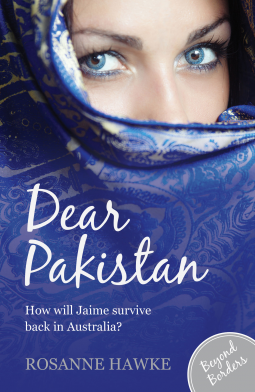
Jaimie Richards spent whole her childhood in Pakistan where she adjusted well to local culture and traditions. At the age of 16 she returns to her homeland, Australia. The girl feels more Pakistani than Australian though, and is having problems to accommodate to new place, fit into school environment and comprehend the rules of daily life. This is a great young adult book. I strongly believe many young people could identify themselves with Jaimie. While the author shows the difficulties of young people coming or returning to Australia, the story refers to every person who tries to fit to the new culture. It might be Pakistani coming to Australia, Turkish coming to Germany, or Polish coming to The Great Britain. Regardless the origin of people, problems and difficulties are universal. From Jaimie’s letter we learn how painful the changes are for a young person: Dear Pakistan I have heard about what people go through when someone dies. Well, that is what I feel like right now. Something is dying. Surprisingly, Jaimie’s parents are very passive characters. In fact, they play minor roles in her life. They appear here and there but I got impression they do not care or are unable to help their child, who goes through tough time. On the other hand, it happens in today’s world that teenagers deal with the pain on their own and sometimes parents are simply hopeless and cannot connect with their children. Jaimie reminds the readers that there is also positive aspect of living in different culture: But that experience of living in a different culture from you own is one of the most enriching things that can happen to a person. You have a different perspective on life from the one you would have had if you had been brought up here. The author highlights that there are places like Pakistan, where life is very simple and places like Australia, where many people get into a trap of consumerism. Nevertheless, Hawke praises Pakistan too much sometimes. To illustrate, when Jaimie compares Australia to Pakistan she describes the latter in the following way: “It was being fair that mattered there”. With all due respect for Pakistan and people who live there, women’s life is neither fair nor easy in Pakistan. The author reminds about sad true that in many cases immigrants are perceived by host country as less educated and less valued. As a matter of fact, not all of immigrants want to live from social benefits; many migrants are well educated, hardworking and could contribute to the host countries’ societies and economies. However, they are not treated fairly like some of people coming to Australia: “Another brilliant guy driving a taxi because his experience wasn’t recognized.” The narrator is Jaimie herself. Each chapter devoted to her life in Australia is followed by letter to Pakistan. I don’t understand why the author went for this construction. I think it would be much better for the book if she wrote about Jaimie’s life from third person perspective and Jaimie’s letters would bring a breath of fresh air. And a few words about the book cover. It looks like Jean Sasson’s books about women in the Middle East. When my husband saw the cover he said this books is about European woman married to a Muslim. In fact, any book about Middle East involving women has the same predictable cover. Since this is young adult book, I would like to see a young girl not mature woman. Don’t get me wrong, I am not saying the cover is not beautiful but I expected something more ambitious. Dear Pakistan is a great read. I would strongly recommend it to any young person who have difficulties to adjust to the new place. On the other hand, people who never changed their place of residence might find this book helpful to understand the problems of immigrants. Overall rating: well-deserved 5/5 |
My Recommendation
|
Additional Information
Available Editions
| EDITION | Paperback |
| ISBN | 9781925139549 |
| PRICE | US$12.99 (USD) |
Available on NetGalley
| Send To Kindle (MOBI) |
| Download (EPUB) |
Featured Reviews
Anne F, Reviewer
|
My Recommendation
|
|
4.5 stars. This is such a great book about teenager who grew up in Pakistan adapting to Australian culture. It really resonated with me as I was a migrant to Australia too, albeit a lot younger than the main character when we moved here. I think Rosanne Hawke did a great job of depicting the struggles of fitting in and making new friends in a foreign culture. I couldn't help but think of Malala when I read this too and the similar struggle she went through when she started living in England. Overall a very well written book, I wouldn't mind reading the next one in the series too. |
My Recommendation
|
|
My Recommendation
|
|
I received this from Netgalley in exchange for an honest review. This is one of the most impressive and well written book in the YA genre I have read in a long time. Jamie is struggling in her youth as she returns to her homeland Australia. She has spent most of her life in Pakistan and following their culture. Now back in Australia the culture, customs and tolerance is very difficult for her. There is a great message in this story for all ages. Actually two messages. First, tolerance and acceptance for anyone and secondly acceptance and love for yourself. Beautifully written and very good read. |
My Recommendation
|
|
My Recommendation
|
|
This story about reverse culture shock rang so real, I had to go back to the summary and make sure it was really fiction. Jamie is still in high school when her family decides to leave Pakistan and move back to Australia so she and her siblings could continue their education. Even though she is supposed to be home, she feels like an alien, and as if she has lost her identity. The story is narrated in first person and has few parts initially in a diary form—where Jamie changed the greeting for "Dear Pakistan—and then as a story inside the story, a kind of a what-if in case she had remained in Pakistan. I didn't like those parts for most of the book but it gradually caught me. I haven't experienced anything close to Jamie but even I could relate to her situation. The author knew to put in words the feeling of not knowing where home is, and having lived through something though less intense I could identify word by word. I believe it is the perfect pick for a younger public, middle-grade level. Moreover, the different point of view on Pakistan was very enriching, and would make for a heated discussion in a group, when compared to what one would usually think of the country and its costumes. |
My Recommendation
|
|
My Recommendation
|
|
Dear Pakistan What a gem of a book! This young adult book has a little bit of everything that would appeal to mainly teenage girls I would say, who are interested in different cultures and facing teen challenges. Jaime, or Jameela has returned to Australia after living in Pakistan for her formative years. I loved how the transition was handled, how the culture shock was dealt with and how Jaime faced the confusion over her identity. I loved all the characters, the story and I look forward to reading the next instalment. With many thanks to the publisher and Netgalley for an ARC in exchange for an honest review. 5* from me. |
My Recommendation
|
|
My Recommendation
|
|
Jaimie Richards spent whole her childhood in Pakistan where she adjusted well to local culture and traditions. At the age of 16 she returns to her homeland, Australia. The girl feels more Pakistani than Australian though, and is having problems to accommodate to new place, fit into school environment and comprehend the rules of daily life. This is a great young adult book. I strongly believe many young people could identify themselves with Jaimie. While the author shows the difficulties of young people coming or returning to Australia, the story refers to every person who tries to fit to the new culture. It might be Pakistani coming to Australia, Turkish coming to Germany, or Polish coming to The Great Britain. Regardless the origin of people, problems and difficulties are universal. From Jaimie’s letter we learn how painful the changes are for a young person: Dear Pakistan I have heard about what people go through when someone dies. Well, that is what I feel like right now. Something is dying. Surprisingly, Jaimie’s parents are very passive characters. In fact, they play minor roles in her life. They appear here and there but I got impression they do not care or are unable to help their child, who goes through tough time. On the other hand, it happens in today’s world that teenagers deal with the pain on their own and sometimes parents are simply hopeless and cannot connect with their children. Jaimie reminds the readers that there is also positive aspect of living in different culture: But that experience of living in a different culture from you own is one of the most enriching things that can happen to a person. You have a different perspective on life from the one you would have had if you had been brought up here. The author highlights that there are places like Pakistan, where life is very simple and places like Australia, where many people get into a trap of consumerism. Nevertheless, Hawke praises Pakistan too much sometimes. To illustrate, when Jaimie compares Australia to Pakistan she describes the latter in the following way: “It was being fair that mattered there”. With all due respect for Pakistan and people who live there, women’s life is neither fair nor easy in Pakistan. The author reminds about sad true that in many cases immigrants are perceived by host country as less educated and less valued. As a matter of fact, not all of immigrants want to live from social benefits; many migrants are well educated, hardworking and could contribute to the host countries’ societies and economies. However, they are not treated fairly like some of people coming to Australia: “Another brilliant guy driving a taxi because his experience wasn’t recognized.” The narrator is Jaimie herself. Each chapter devoted to her life in Australia is followed by letter to Pakistan. I don’t understand why the author went for this construction. I think it would be much better for the book if she wrote about Jaimie’s life from third person perspective and Jaimie’s letters would bring a breath of fresh air. And a few words about the book cover. It looks like Jean Sasson’s books about women in the Middle East. When my husband saw the cover he said this books is about European woman married to a Muslim. In fact, any book about Middle East involving women has the same predictable cover. Since this is young adult book, I would like to see a young girl not mature woman. Don’t get me wrong, I am not saying the cover is not beautiful but I expected something more ambitious. Dear Pakistan is a great read. I would strongly recommend it to any young person who have difficulties to adjust to the new place. On the other hand, people who never changed their place of residence might find this book helpful to understand the problems of immigrants. Overall rating: well-deserved 5/5 |
My Recommendation
|