Please wait... This may take a moment.
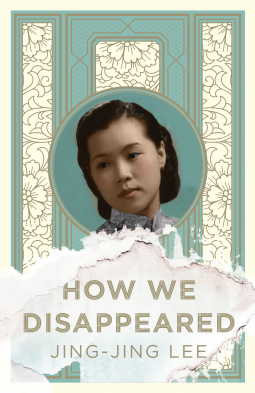
How We Disappeared
This title was previously available on NetGalley and is now archived.
Pub Date
8 Mar 2019
| Archive Date
27 Mar 2019
Description
When her husband dies in the year 2000, Wang Di is forced into the solitary life of a widow in modern Singapore. But this new silence brings with it a surge of memories, taking her back to the brutal events of the Japanese invasion which altered the course of her life forever.
Twelve-year-old Kevin is preoccupied with his own family worries; his father is suffering from depression, Kevin is being bullied at school, and his beloved grandmother’s health is declining fast. And then, on her deathbed, she makes a surprising confession – one she never meant for Kevin to hear.
Back in 1942, Wang Di is sixteen years old and forced into sexual slavery as a Comfort Woman. What she sees and experiences will haunt her present nearly sixty years later. Meanwhile, after his grandmother’s death, Kevin sets about finding out the truth – a truth that will lead him to Wang Di; to the events of that brutal war and to a reckoning no one is prepared for and which can no longer be suppressed.
They say the truth will set you free – but what if its horrors have been the very chains you have longed to escape from your whole life?
When her husband dies in the year 2000, Wang Di is forced into the solitary life of a widow in modern Singapore. But this new silence brings with it a surge of memories, taking her back to the brutal...
Description
When her husband dies in the year 2000, Wang Di is forced into the solitary life of a widow in modern Singapore. But this new silence brings with it a surge of memories, taking her back to the brutal events of the Japanese invasion which altered the course of her life forever.
Twelve-year-old Kevin is preoccupied with his own family worries; his father is suffering from depression, Kevin is being bullied at school, and his beloved grandmother’s health is declining fast. And then, on her deathbed, she makes a surprising confession – one she never meant for Kevin to hear.
Back in 1942, Wang Di is sixteen years old and forced into sexual slavery as a Comfort Woman. What she sees and experiences will haunt her present nearly sixty years later. Meanwhile, after his grandmother’s death, Kevin sets about finding out the truth – a truth that will lead him to Wang Di; to the events of that brutal war and to a reckoning no one is prepared for and which can no longer be suppressed.
They say the truth will set you free – but what if its horrors have been the very chains you have longed to escape from your whole life?
Advance Praise
‘This is a brilliant, heart-breaking story with an unforgettable image of how women were silenced and disappeared by both war and culture.’ Xinran, author of The Good Women of China
‘A heartbreaking story told with such humanity and grace. The details of How We Disappeared are so vivid they return to me in dreams.’ Marti Leimbach, author of Dying Young and Daniel Isn't Talking
'A shattering, tender and absorbing novel that centres around the unfathomable cruelty that women in Singapore endured…Meticulously researched, exquisitely written.. I’m reeling from its power—what an absolute triumph.' Fiona Mitchell, author of The Maid’s Room
‘This is a brilliant, heart-breaking story with an unforgettable image of how women were silenced and disappeared by both war and culture.’ Xinran, author of The Good Women of China
‘A heartbreaking...
Advance Praise
‘This is a brilliant, heart-breaking story with an unforgettable image of how women were silenced and disappeared by both war and culture.’ Xinran, author of The Good Women of China
‘A heartbreaking story told with such humanity and grace. The details of How We Disappeared are so vivid they return to me in dreams.’ Marti Leimbach, author of Dying Young and Daniel Isn't Talking
'A shattering, tender and absorbing novel that centres around the unfathomable cruelty that women in Singapore endured…Meticulously researched, exquisitely written.. I’m reeling from its power—what an absolute triumph.' Fiona Mitchell, author of The Maid’s Room
Available Editions
| EDITION |
Other Format |
| ISBN |
9781786074126 |
| PRICE |
CA$40.50 (CAD)
|
| PAGES |
320
|
Additional Information
Available Editions
| EDITION |
Other Format |
| ISBN |
9781786074126 |
| PRICE |
CA$40.50 (CAD)
|
| PAGES |
320
|
Average rating from 29 members
Featured Reviews
 Rachel R, Reviewer
5 stars
5 stars
5 stars
5 stars
5 stars
This book is a work of art. I loved absolutely everything about it. Set in Singapore during the Japanese occupation, it tells the story of a woman who lived in abhorrent circumstances and survived. It is lightly interwoven with the story of her husband and the horrors he too experienced at the hands of the Japanese.
It isn't an easy story to read but it is so worth it. By the end my heart was broken, but my mind and soul felt so enriched. An incredibly powerful story that will stay with me for a long time.
5 stars
5 stars
5 stars
5 stars
5 stars
 Bookly B, Book Trade Professional
5 stars
5 stars
5 stars
5 stars
5 stars
A heart-breaking story. It was fascinating to learn more about Singapore during the war and I loved the weaving together of two timelines - old and modern.This book will stay with me. Sensitive writing on a difficult subject.
5 stars
5 stars
5 stars
5 stars
5 stars
 Gill L, Reviewer
5 stars
5 stars
5 stars
5 stars
5 stars
This beautifully written story laments the damage done to relationships and individuals, by keeping secrets considered ‘shameful’ and not speaking out of what is buried deep inside us; how this affects future love, ‘self-growth’ and respect.
Wang Di and Soon Wei have been married for over 50 years. Each kept quiet about their respective catastrophic wartime experiences, each trying to ‘protect’ the other and one bearing a deep ‘shame’ which she was warned never to speak about by her own mother – particularly to her husband. Wang Di is Soon Wei’s second wife – she never questions where he vanishes to every February and he never gives an explanation. When he dies, she has so many questions unanswered and secrets unvoiced.
Alongside their story is a modern one about Wei Han, or ‘Kevin’, a curious 12 year old who is losing his sight. He loves his Grandma dearly and inherits her tape recorder with which he hopes to prepare himself for the blindness which is expected in his future. On her deathbed she believes Wei Han is his father and is taped making a confusing confession to him .
Both our main characters, Wang Di and Wei Han are eager to discover the truth about their recently lost loved ones. The story is their journeys of discovery, their determination and how both become stronger people – the result is uplifting and life affirming. I love this book; how it’s written, its message, its philosophy.
Shocking, gritty in places (where required), the author does not shy away from horror and despair where it needs to be described. The title suggests not only how society made certain people ‘disappear’ – namely the ‘Comfort Women’, and those witness to atrocities in WWII but also how individuals try to make parts of their very being ‘disappear’ when it is too hurtful to remember or reveal to someone else – even their closest loved ones. A real gem of a book.
5 stars
5 stars
5 stars
5 stars
5 stars
 Roman C, Reviewer
4 stars
4 stars
4 stars
4 stars
4 stars
"Who's going to listen?" I repeated. [...] "Don't tell anyone. Not me or your father or any of the neighbours. Especially not your future husband."
An important book that is hard reading at times as we learn the story of one woman's life as a 'comfort woman' to the Japanese Army in Singapore during WW2.
I have to say that I found this uneven in places: I loved the heart of the book, Wang Di's cathartic narrative as she finally allows herself to tell the story of her captivity and experiences. But I found it all wrapped up in far less entrancing tales: Wang Di as an old woman 'now', and Kevin who is searching for his antecedents. Not just do these stories take away from the prime wartime narrative, but I tend to dislike these kinds of full-circle 'happy' endings, reuniting the lost.
Still, what I consider the main story is wonderfully realised in all its horror and terror. What is so striking is not just what these women went through during the war, but the shame they experienced as if they had done something wrong rather than having wrong done to them. The cultural burden of silence imposed on them by their families who wanted to just look away is what tore me up the most.
So I might not have necessarily agreed with the structural and narrative decisions that the author made but would recommend this book widely: it's painful reading but surely urgent and necessary - especially as women are still being trafficked into sexual slavery, and placed in 'rape camps' in wars around the world.
4 stars
4 stars
4 stars
4 stars
4 stars
 Lis S, Reviewer
5 stars
5 stars
5 stars
5 stars
5 stars
I wasn’t sure what to make of this but thought I would expand my reading and am so glad I did. This book kept me gripped from the first page where Wang Di tells the reader two stories of how she may have been welcomed into the world.
The book is told in two times frames and two perspectives both on the island of Singapore. In 1942 we meet Wang Di a seventeen year old girl who is just waiting for the matchmaker to find her a husband, once her family agree, but then the Japanese invade. In 2000 twelve year old Kevin is trying to get through the perils of being a child in today’s world and grief on the loss of his grandmother.
It was like a thriller you knew what was going to happen to Wang Di but you dread it with every page and hope for a happy ending. Knowing that the story is based in historical truths the happy ending seems unlikely.
I loved this book and how the story of Wang Di unravelled before becoming whole again. I would highly recommend this book and enjoyed learning about the history of Singapore as I learned Wang Di’s.
Thanks to OneWorld publications and NetGalley for an ARC.
#NetGalley #HowWeDisappeared
5 stars
5 stars
5 stars
5 stars
5 stars
 Jennifer C, Reviewer
5 stars
5 stars
5 stars
5 stars
5 stars
‘He knew what the unsaid did to people. Ate away at them from the inside.’
Singapore, 1942. The Japanese troops sweep all before them as they move through Malaysia and into Singapore. In one village, only two people and a tiny child survive. In a nearby village, seventeen-year-old Wang Di is taken from her village to a Japanese military brothel, where she is forced into sexual slavery. Wang Di becomes one of becomes one of the ‘comfort women’.
Later, Wang Di marries. Her husband, affectionately known as ‘The Old One’ has also been traumatised by the war. He was widowed and lost his family. The two of them never speak to each other of their experiences.
And then, years later after ‘The Old One’ dies, Wang Di tries to find out more about his past.
‘’Tell me a story.’ It was then she knew he had been waiting to say this. Waiting for decades for the right moment. And now he couldn’t wait anymore.’
Almost sixty years later, in 2000, twelve-year-old Kevin is with his grandmother as she is dying. She reveals to Kevin (unintentionally) a secret that she has kept for many years. Kevin sets out to find out more about this secret.
The novel shifts between the young Wang Di and her experiences during the war, the elderly Wang Di and her search, and Kevin and his search.
I found parts of this novel difficult to read: the experiences of the ‘comfort women’ and their treatment are harrowing. Ms Lee’s writing kept me reading, as did my desire to learn more about the secrets ‘The Old One’ and Wang Di had kept from each other. Each trying to protect the other from the horrors of the past.
There is both horror and hope in this novel. It is a novel I will reread.
‘Sometimes all you had to do to get someone to talk was to be silent.’
Note: My thanks to NetGalley and Oneworld Publications for providing me with a free electronic copy of this book for review purposes.
Jennifer Cameron-Smith
5 stars
5 stars
5 stars
5 stars
5 stars
Featured Reviews
Rachel R, Reviewer
5 stars
5 stars
5 stars
5 stars
5 stars
This book is a work of art. I loved absolutely everything about it. Set in Singapore during the Japanese occupation, it tells the story of a woman who lived in abhorrent circumstances and survived. It is lightly interwoven with the story of her husband and the horrors he too experienced at the hands of the Japanese.
It isn't an easy story to read but it is so worth it. By the end my heart was broken, but my mind and soul felt so enriched. An incredibly powerful story that will stay with me for a long time.
5 stars
5 stars
5 stars
5 stars
5 stars
Bookly B, Book Trade Professional
5 stars
5 stars
5 stars
5 stars
5 stars
A heart-breaking story. It was fascinating to learn more about Singapore during the war and I loved the weaving together of two timelines - old and modern.This book will stay with me. Sensitive writing on a difficult subject.
5 stars
5 stars
5 stars
5 stars
5 stars
Gill L, Reviewer
5 stars
5 stars
5 stars
5 stars
5 stars
This beautifully written story laments the damage done to relationships and individuals, by keeping secrets considered ‘shameful’ and not speaking out of what is buried deep inside us; how this affects future love, ‘self-growth’ and respect.
Wang Di and Soon Wei have been married for over 50 years. Each kept quiet about their respective catastrophic wartime experiences, each trying to ‘protect’ the other and one bearing a deep ‘shame’ which she was warned never to speak about by her own mother – particularly to her husband. Wang Di is Soon Wei’s second wife – she never questions where he vanishes to every February and he never gives an explanation. When he dies, she has so many questions unanswered and secrets unvoiced.
Alongside their story is a modern one about Wei Han, or ‘Kevin’, a curious 12 year old who is losing his sight. He loves his Grandma dearly and inherits her tape recorder with which he hopes to prepare himself for the blindness which is expected in his future. On her deathbed she believes Wei Han is his father and is taped making a confusing confession to him .
Both our main characters, Wang Di and Wei Han are eager to discover the truth about their recently lost loved ones. The story is their journeys of discovery, their determination and how both become stronger people – the result is uplifting and life affirming. I love this book; how it’s written, its message, its philosophy.
Shocking, gritty in places (where required), the author does not shy away from horror and despair where it needs to be described. The title suggests not only how society made certain people ‘disappear’ – namely the ‘Comfort Women’, and those witness to atrocities in WWII but also how individuals try to make parts of their very being ‘disappear’ when it is too hurtful to remember or reveal to someone else – even their closest loved ones. A real gem of a book.
5 stars
5 stars
5 stars
5 stars
5 stars
Roman C, Reviewer
4 stars
4 stars
4 stars
4 stars
4 stars
"Who's going to listen?" I repeated. [...] "Don't tell anyone. Not me or your father or any of the neighbours. Especially not your future husband."
An important book that is hard reading at times as we learn the story of one woman's life as a 'comfort woman' to the Japanese Army in Singapore during WW2.
I have to say that I found this uneven in places: I loved the heart of the book, Wang Di's cathartic narrative as she finally allows herself to tell the story of her captivity and experiences. But I found it all wrapped up in far less entrancing tales: Wang Di as an old woman 'now', and Kevin who is searching for his antecedents. Not just do these stories take away from the prime wartime narrative, but I tend to dislike these kinds of full-circle 'happy' endings, reuniting the lost.
Still, what I consider the main story is wonderfully realised in all its horror and terror. What is so striking is not just what these women went through during the war, but the shame they experienced as if they had done something wrong rather than having wrong done to them. The cultural burden of silence imposed on them by their families who wanted to just look away is what tore me up the most.
So I might not have necessarily agreed with the structural and narrative decisions that the author made but would recommend this book widely: it's painful reading but surely urgent and necessary - especially as women are still being trafficked into sexual slavery, and placed in 'rape camps' in wars around the world.
4 stars
4 stars
4 stars
4 stars
4 stars
Lis S, Reviewer
5 stars
5 stars
5 stars
5 stars
5 stars
I wasn’t sure what to make of this but thought I would expand my reading and am so glad I did. This book kept me gripped from the first page where Wang Di tells the reader two stories of how she may have been welcomed into the world.
The book is told in two times frames and two perspectives both on the island of Singapore. In 1942 we meet Wang Di a seventeen year old girl who is just waiting for the matchmaker to find her a husband, once her family agree, but then the Japanese invade. In 2000 twelve year old Kevin is trying to get through the perils of being a child in today’s world and grief on the loss of his grandmother.
It was like a thriller you knew what was going to happen to Wang Di but you dread it with every page and hope for a happy ending. Knowing that the story is based in historical truths the happy ending seems unlikely.
I loved this book and how the story of Wang Di unravelled before becoming whole again. I would highly recommend this book and enjoyed learning about the history of Singapore as I learned Wang Di’s.
Thanks to OneWorld publications and NetGalley for an ARC.
#NetGalley #HowWeDisappeared
5 stars
5 stars
5 stars
5 stars
5 stars
Jennifer C, Reviewer
5 stars
5 stars
5 stars
5 stars
5 stars
‘He knew what the unsaid did to people. Ate away at them from the inside.’
Singapore, 1942. The Japanese troops sweep all before them as they move through Malaysia and into Singapore. In one village, only two people and a tiny child survive. In a nearby village, seventeen-year-old Wang Di is taken from her village to a Japanese military brothel, where she is forced into sexual slavery. Wang Di becomes one of becomes one of the ‘comfort women’.
Later, Wang Di marries. Her husband, affectionately known as ‘The Old One’ has also been traumatised by the war. He was widowed and lost his family. The two of them never speak to each other of their experiences.
And then, years later after ‘The Old One’ dies, Wang Di tries to find out more about his past.
‘’Tell me a story.’ It was then she knew he had been waiting to say this. Waiting for decades for the right moment. And now he couldn’t wait anymore.’
Almost sixty years later, in 2000, twelve-year-old Kevin is with his grandmother as she is dying. She reveals to Kevin (unintentionally) a secret that she has kept for many years. Kevin sets out to find out more about this secret.
The novel shifts between the young Wang Di and her experiences during the war, the elderly Wang Di and her search, and Kevin and his search.
I found parts of this novel difficult to read: the experiences of the ‘comfort women’ and their treatment are harrowing. Ms Lee’s writing kept me reading, as did my desire to learn more about the secrets ‘The Old One’ and Wang Di had kept from each other. Each trying to protect the other from the horrors of the past.
There is both horror and hope in this novel. It is a novel I will reread.
‘Sometimes all you had to do to get someone to talk was to be silent.’
Note: My thanks to NetGalley and Oneworld Publications for providing me with a free electronic copy of this book for review purposes.
Jennifer Cameron-Smith
5 stars
5 stars
5 stars
5 stars
5 stars
Readers who liked this book also liked:
Treason
Andrew Taylor
General Fiction (Adult), Historical Fiction, Mystery & Thrillers
Bad Words
Rioghnach Robinson
General Fiction (Adult), Multicultural Interest, Romance
Break the Ice
Kristen Bailey
General Fiction (Adult), Romance, Women's Fiction
Soft Core
Brittany Newell
Erotica, General Fiction (Adult)