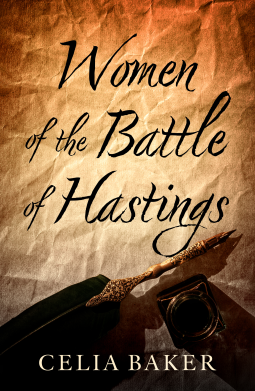
Women of the Battle of Hastings
This title was previously available on NetGalley and is now archived.
Send NetGalley books directly to your Kindle or Kindle app
1
To read on a Kindle or Kindle app, please add kindle@netgalley.com as an approved email address to receive files in your Amazon account. Click here for step-by-step instructions.
2
Also find your Kindle email address within your Amazon account, and enter it here.
Pub Date 28 Apr 2026 | Archive Date 26 May 2026
Talking about this book? Use #WomenoftheBattleofHastings #NetGalley. More hashtag tips!
Description
In the years before England is broken and remade at the Battle of Hastings, three women move through a world on the brink of conquest.
Matilda of Flanders - Duchess of Normandy and Queen of England.
Judith, sister to Matilda and wife to the volatile Tostig Godwinson.
Godgifu, bastard granddaughter to Queen Emma of Normandy, and one of the last descendants of England’s ancient Anglo-Saxon royal line.
Bound by kinship, friendship, and the ambitions of the men around them, these women witness the slow unravelling of a realm as the future of England hangs in the balance.
Set across fifteen turbulent years leading to the Battle of Hastings, this novel reimagines the Norman Conquest through the eyes of the women whose lives were shaped by the conflict.
A Note From the Publisher
Available Editions
| EDITION | Ebook |
| ISBN | 9781806345571 |
| PRICE | £4.99 (GBP) |
| PAGES | 200 |
Available on NetGalley
Available to Buy
Buy on Amazon Buy on Bookshop.org Buy on Kobo Buy on WaterstonesAverage rating from 3 members
Featured Reviews
 Donna U, Reviewer
Women of the Battle of Hastings by Celia Baker | Pub Date: 28 April 2026 | ⭐⭐⭐⭐⭐ (5/5)
Women of the Battle of Hastings is a richly immersive and beautifully constructed historical novel that brings a fresh and compelling perspective to one of England’s most pivotal moments. Celia Baker masterfully shifts the focus from the battlefield to the women who lived through the uncertainty, ambition, and upheaval of the Norman Conquest.
Told through the perspectives of Matilda of Flanders, Judith, and Godgifu, the novel offers a layered and nuanced portrayal of lives shaped by power, loyalty, and survival. Each woman is distinct in voice and circumstance, yet their stories intertwine seamlessly, creating a narrative that feels both intimate and expansive. Their positions—whether at the heart of Norman power or tied to the fading Anglo-Saxon line—allow the reader to experience the tension of a country on the brink of transformation from multiple angles.
What stands out most is the depth of historical detail. Baker’s research is evident throughout, yet it never overwhelms the storytelling. Instead, it enhances the authenticity of the world, grounding the political intrigue and personal struggles in a setting that feels vivid and real. The fifteen-year span is handled with precision, allowing the gradual build-up to the Battle of Hastings to unfold naturally, maintaining both momentum and emotional investment.
The novel excels in its portrayal of the often-overlooked influence of women in history. Their roles may be constrained by the era, but their impact is undeniable, whether through diplomacy, resilience, or quiet defiance. The emotional undercurrents—loyalty, loss, ambition, and identity—are explored with sensitivity and depth, making their journeys as compelling as the historical events themselves.
For readers who appreciate historical fiction that combines strong characterisation with meticulous world-building, this is an outstanding read. It is both an engaging reimagining of history and a powerful reminder of the voices that are too often left unheard.
 Lily A, Reviewer
In this multiple-perspective historical fiction novel, readers follow Matilda of Flanders (the Duchess of Normandy and Queen of England), her sister Judith (now married to Tostig Godwinson), and Godgifu, the bastard granddaughter of Queen Emma of Normandy and one of the last members of the Anglo-Saxon royal line as England’s eleventh-century succession crisis unfolds. Bound by their familial ties, friendship, and the ambitions of their husbands and men around them, the women watch the fate of England hang in the balance over the fifteen tumultuous years leading up to the Battle of Hastings in October 1066. The characters are dynamic and complex, and they communicate with each other across the narrative through letters, so their chapters are not fully separated. The historical details really highlight how prolonged this succession question is and the changing power dynamic of northern Europe and England, while the lengthening of the story really adds depth to the narrative and ups the stakes that the readers know are coming. With three competent protagonists and a wealth of historical details and side characters, this is a fascinating and immersive historical fiction novel from Celia Baker that fans of historical dramas, complicated relationships, and political intrigue will love.
 Fiona G, Reviewer
First off, what an absolutely beautiful book!
I was taken through fifteen years of history leading up to the Battle of Hastings, during the conflict, and its aftermath. The story is told through the fascinating perspectives of three women: Matilda of Flanders, Judith, and Godgifu. Throughout the novel, you get to know them deeply through their personal experiences of loss, resilience, and change.
I learned alot about the history surrounding the Norman Conquest through this read. Where I grew up, we didn't cover this era in school, so it was nice to dive deeper into it. Even though it is historical fiction, I loved how the author wove hard facts directly into the narrative, making it educational without losing the magic of the story.
The pacing was spot-on, and I was always keen to keep reading. While the book isn't overly long, it felt like the perfect length to capture the story surrounding the conflict without any unnecessary filler.
Overall, this is an informative and perspective-driven read. I highly recommend it to any history fan looking for a fresh, female-led take on the Norman Conquest.
I will definitely be looking out for more books by Celia Baker in the future!
A massive thank you to NetGalley and Troubador Publishing. Thank you, Celia Baker, for creating a book that leaves me wanting to discover even more about this time period.
Readers who liked this book also liked:



Lexi Davis
General Fiction (Adult), New Adult, Romance







Amy Wilson
Children's Fiction, Middle Grade, Sci Fi & Fantasy