Please wait... This may take a moment.
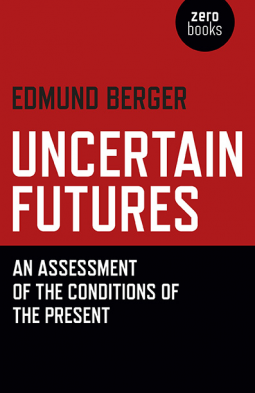
Uncertain Futures
An Assessment Of The Conditions Of The Present
This title was previously available on NetGalley and is now archived.
Pub Date
22 Feb 2017
| Archive Date
28 Feb 2017
Description
Uncertain Futures: An Assessment of the Conditions of the Present provides a detailed look into the economic and political conditions of our present moment from a Marxist perspective. Key aspects of Marxist economic theory are illustrated in clear ways in order to provide an easy introduction to Marxist thought and their applicability. The book also examines the sluggish recovery from the Great Recession, in the context of the long-term feasibility of sustaining the capitalist system by placing it into a historical framework. It considers the necessity of social democratic reforms while calling for an anarchic re-invigoration of the politics of everyday life.
Uncertain Futures: An Assessment of the Conditions of the Present provides a detailed look into the economic and political conditions of our present moment from a Marxist perspective. Key aspects of...
Description
Uncertain Futures: An Assessment of the Conditions of the Present provides a detailed look into the economic and political conditions of our present moment from a Marxist perspective. Key aspects of Marxist economic theory are illustrated in clear ways in order to provide an easy introduction to Marxist thought and their applicability. The book also examines the sluggish recovery from the Great Recession, in the context of the long-term feasibility of sustaining the capitalist system by placing it into a historical framework. It considers the necessity of social democratic reforms while calling for an anarchic re-invigoration of the politics of everyday life.
Advance Praise
Juxtaposes an economic analysis of the modern era with a detailed political history.
Juxtaposes an economic analysis of the modern era with a detailed political history.
Marketing Plan
Edmund Berger is an independent writer, researcher, and activist living in Louisville, Kentucky. His primary focuses are on the evolution of technology and its impact on changing modes of capitalist production, the role of warfare in the economy, and the history of the avant-gardes as critiques and responses to paradigms of power.
Edmund Berger is an independent writer, researcher, and activist living in Louisville, Kentucky. His primary focuses are on the evolution of technology and its impact on changing modes of capitalist...
Marketing Plan
Edmund Berger is an independent writer, researcher, and activist living in Louisville, Kentucky. His primary focuses are on the evolution of technology and its impact on changing modes of capitalist production, the role of warfare in the economy, and the history of the avant-gardes as critiques and responses to paradigms of power.
Available Editions
| EDITION |
Other Format |
| ISBN |
9781785355004 |
| PRICE |
CA$29.95 (CAD)
|
Additional Information
Available Editions
| EDITION |
Other Format |
| ISBN |
9781785355004 |
| PRICE |
CA$29.95 (CAD)
|
Average rating from 1 member
Featured Reviews
 David W, Media/Journalist
0 stars
0 stars
0 stars
0 stars
0 stars
Not set
Put two economists in the same room and you will understand why Congress never works. Put a book together with economists’ views on neoliberalism and socialism, and you get a bickering collection of angles and aspects, all of which can be disputed.
Uncertain Futures is a title that captures this ethos well. It consists of three chapters, roughly past present and future. The future is of the one of most interest, and is therefore the most disappointing. Berger is very cautious, maybe because he himself has just demonstrated the potential of instant criticism, or maybe because he is uncertain himself. Or both. But his final recommendation is to create support networks around the world. Put the 99% in touch, with co-operatives, unions and movements. This will raise the profile of socialism as viable, and provide a concrete answer to the precarity that neoliberalism has entrenched. Sounds like a very long term plan.
The race to the bottom should now be obvious to everyone. Fascism, an inherent if not necessary component of capitalism, has been dramatically rising in numerous democracies. It absolutely must, as the 99% looks for a savior from their absurd position and condition. Yet the fear it plays on helps cement the status quo, because fascists are dictators protecting their gains. Berger says “Fascism is nothing less than the intensification of every regressive sentiment to be found in the whole of society, mobilized and put on the march by elements in the ruling class.” And “To reform capitalism at this stage is a revolutionary act.” That’s how far we’ve fallen.
David Wineberg
0 stars
0 stars
0 stars
0 stars
0 stars
Not set
Featured Reviews
David W, Media/Journalist
0 stars
0 stars
0 stars
0 stars
0 stars
Not set
Put two economists in the same room and you will understand why Congress never works. Put a book together with economists’ views on neoliberalism and socialism, and you get a bickering collection of angles and aspects, all of which can be disputed.
Uncertain Futures is a title that captures this ethos well. It consists of three chapters, roughly past present and future. The future is of the one of most interest, and is therefore the most disappointing. Berger is very cautious, maybe because he himself has just demonstrated the potential of instant criticism, or maybe because he is uncertain himself. Or both. But his final recommendation is to create support networks around the world. Put the 99% in touch, with co-operatives, unions and movements. This will raise the profile of socialism as viable, and provide a concrete answer to the precarity that neoliberalism has entrenched. Sounds like a very long term plan.
The race to the bottom should now be obvious to everyone. Fascism, an inherent if not necessary component of capitalism, has been dramatically rising in numerous democracies. It absolutely must, as the 99% looks for a savior from their absurd position and condition. Yet the fear it plays on helps cement the status quo, because fascists are dictators protecting their gains. Berger says “Fascism is nothing less than the intensification of every regressive sentiment to be found in the whole of society, mobilized and put on the march by elements in the ruling class.” And “To reform capitalism at this stage is a revolutionary act.” That’s how far we’ve fallen.
David Wineberg
0 stars
0 stars
0 stars
0 stars
0 stars
Not set