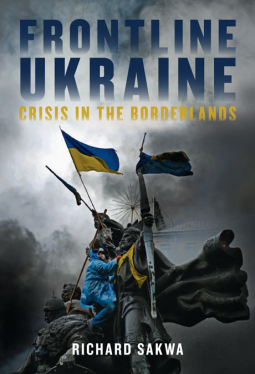
Frontline Ukraine
Crisis in the Borderlands
by Richard Sakwa
Pub Date 27 Feb 2015
Description
The first account of one of the gravest international crisis of the 21st century
* Essential perspective on - and background to - recent events in Ukraine and Crimea
*Includes first-hand perspectives and interviews, based on travel to the region
The unfolding crisis in Ukraine has brought the world to the brink of a new Col War. As Russia and Ukraine tussle for Crimea and the eastern regions, relations between Putin and the West have reached an all-time low. How did we get here? Richard Sakwa here unpicks the story of Russo-Ukrainian relations and traces the path to the recent disturbances through five 'revolutions', which have forced Ukraine, a country internally divided between East and West, to choose between closer union with Europe or its historic ties with Russia. The first full account of the ongoing crisis, Frontline Ukraine explains the origins, developments and global significance of the battle for Crimea.
Note: this galley is an uncorrected proof copy
‘This is an amazing book challenging the dominant Western narrative about the Ukraine crisis. It is a balanced analysis highlighting the deeper causes of this European crisis.’
Gerhard Mangott
The first account of one of the gravest international crisis of the 21st century
* Essential perspective on - and background to - recent events in Ukraine and Crimea
*Includes first-hand...
Description
The first account of one of the gravest international crisis of the 21st century
* Essential perspective on - and background to - recent events in Ukraine and Crimea
*Includes first-hand perspectives and interviews, based on travel to the region
The unfolding crisis in Ukraine has brought the world to the brink of a new Col War. As Russia and Ukraine tussle for Crimea and the eastern regions, relations between Putin and the West have reached an all-time low. How did we get here? Richard Sakwa here unpicks the story of Russo-Ukrainian relations and traces the path to the recent disturbances through five 'revolutions', which have forced Ukraine, a country internally divided between East and West, to choose between closer union with Europe or its historic ties with Russia. The first full account of the ongoing crisis, Frontline Ukraine explains the origins, developments and global significance of the battle for Crimea.
Note: this galley is an uncorrected proof copy
‘This is an amazing book challenging the dominant Western narrative about the Ukraine crisis. It is a balanced analysis highlighting the deeper causes of this European crisis.’
Gerhard Mangott
Available Editions
| EDITION | Hardcover |
| ISBN | 9781784530648 |
| PRICE | US$28.00 (USD) |
Available on NetGalley
| Send To Kindle (PDF) |
| Download (PDF) |
Featured Reviews
Jeffrey W, Reviewer
|
My Recommendation
|
|
Frontline Ukraine, by Richard Sakwa was a surprise for me. I am not in any way, shape or form a political scientist, historian, etc, though I was a US Army Soldier for 25 years and served on the the frontlines of the Cold War. This made me interested in this book and the publisher graciously gave me a digital copy in exchange for this review. I am not certain of the author is born and raised British or if he is from "east of the Iron Curtain" originally but he did take the post Cold War NATO expansion to task for causing many problems in Eastern Europe. Russia and its few close allies are surrounded, often right on their borders. Having visited Ukraine post Cold War, I am heartbroken that many of their people probably feel dejected that the Obama administration seemed to do nothing when Russian invaded. Many Ukrainians however were probably ecstatic that politics was maybe going back to the old ways, during the Cold War. If you are interested in Eastern Europe nowadays, I recommend this book to you. This author seems to write many books about Russia and Putin, so examine his portfolio and see what else you may be interested in. |
My Recommendation
|
|
My Recommendation
|
|
Fascinating insight into the Russian mind set behind the current Ukrainian crisis. I’ve never read Richard Sakwa before but he does come across as being a Putin apologist, however he has put together an interesting book helping us to comprehend the Russian psyche behind the crisis in Ukraine. He argues convincingly that the immediate post cold war lack of engagement with Russia as an equal are at the root of the current conflict and that recent US and EU arrogance in telling Russia how to conduct its affairs has further exacerbated the crisis. Evidence of direct US interference has also surfaced via the Snowden revelations. The author provides background to the concept of Ukraine as a nation state and details how Ukraine’s borders are as a result of administrative convenience during the soviet period creating a powder keg of ethnic groups with similar histories, but vastly different agendas. This has resulted in the western portion being mainly made up those wanting greater ties with the west whilst the eastern portion, who in the majority were happy to be part of Ukraine, wanted their language, history and connections with Russia to be recognised. Sakwa describes “memory wars” where each group interpret their thousand years of shared histories in vastly different ways. This is particularly highlighted by the support of some Ukrainian Nationalists for Stepan Bandera (1909 – 1959) a controversial figure both in Ukraine and internationally for his alliance with Nazi Germany and ethnic cleansing of Poles in Galicia at the end of World War 2. Sakwa states that hard-core Ukrainian nationalists won’t countenance a pluralist state and have specifically created laws replacing Russian with Ukrainian as a recognised national language and denied those people any form of determination which was not fundamentally of a purely Ukrainian slant. Sakwa sees the parallels with Hitler in the late 1930s as incorrect with Russia having no capability to invade Poland or the Baltic states, however he is not alone in seeing alarming parallels with 1914. In summary the author sees the Ukrainian crisis as a defensive action by Russia with the annexation of the Crimea as Russia seeing the opportunity of dealing with the Soviet aberration of placing it in the Ukraine SSR in the 1960s, Russian fears of ethnic cleansing but Ukrainian extremists as well as putting a clear marker down to the west that this is Russia’s back yard. As I said earlier Sakwa does come across as being a Putin apologist but I feel the book does give some fascinating insight into the Russian state of mind. Some of the language is a bit too scholarly for my liking, but his detail around Russia's fears of being surrounded by NATO and their long memories of the German-Soviet War (1941-45) and even the Allied Intervention in the Russian Civil War (1917-1922) are notable. |
My Recommendation
|
|
My Recommendation
|
|
If, like me, you find the current Ukraine crisis pretty confusing, this is the book you need. The author goes into the history and origins of the crisis, how it developed and how it is likely to play out. If I still find it all somewhat incomprehensible then no doubt that is my fault not the author’s. A timely and well-researched study of the conflict. |
My Recommendation
|
|
My Recommendation
|
|
Frontline Ukraine: Crisis in the Borderlands is an interesting read because it presents a viewpoint frequently not considered in the Western (NATO) world. Candidly, I disagree with quite a bit of what Richard Sakwa argues; however, after reading Frontline Ukraine I have a much better understanding of the incredible complexity of the issue at hand. For American readers, the challenge will be keeping up with European politics. Though Sakwa does an excellent job describing the European Union, Ukrainian politics, and even Russian politics, I’m still unfamiliar with enough of European politics that I found myself “googling” terms, political parties, and even the branches of government in certain countries. This shouldn’t dissuade Americans from reading Frontline Ukraine, actually Sakwa’s intro into European politics is fantastic. I happen to love comparative politics, and appreciated Sakwa’s assessments. Why should you read this book? Because relations between NATO nations and those opposing NATO have not been this tense since the fall of the Berlin wall. The United States is currently involved in Operation Atlantic Resolve (http://www.defense.gov/home/features/2014/0514_atlanticresolve/) the Department of Defense stating: “The United States is demonstrating its continued commitment to collective security through a series of actions designed to reassure NATO allies and partners of America’s dedication to enduring peace and stability in the region in light of the Russian intervention in Ukraine.” NATO, and perhaps most importantly, the United States and Germany agree that Russia is fueling the unrest in Ukraine, say nothing of the annexation of Crimea. Estonia, Latvia, Lithuania, Finland, Sweden, Norway, Poland…all have undisputed evidence of Russia encroaching on their sea, land, and airspace. Daily, perhaps even hourly, Russia is testing the limits of NATO, in a cat-and-mouse game that has immensely larger ramification than Ukraine. Sakwa states, “Today, Ukraine acts as the Balkans did in 1914, with numerous intersecting domestic conflicts that are amplified and internalized as external actors exacerbate the country’s internal divisions.” Frontline Ukraine helped me understand the Ukrainian events using a different set of eyes. Ukraine is a very large country, with an incredible amount of resources, and a people as diverse as one can imagine. Essentially Sakwa boils down two basic beliefs in Ukrainian politics: Single-nationalism (one Ukrainian culture/language) or Multi-nationalism (embrace many cultures/languages, notably Ukrainian and Russian). Single nationalists (nationalizers) tend to align themselves with Western Europe, and, according to Sakwa, also tend to want to shed their Russian heritage, instead embracing (perhaps even constructing) a heritage entirely distinct from Russia or other Slavic countries. Multi-nationalists (aka. Pluralists), according to Sakwa, are squarely the opposite; instead looking to Russia, a country they tend to identify with more than the West. What’s interesting to me, is the concept that “Multi-nationalists” will divorce themselves from Western Europe, a group that involves dozens of countries, in an effort to be more like the monolith, Russia, specifically, Putin’s Russia. Well I followed Sakwa’s arguments, and definitely found truth in quite a bit of what he says, I think his bias towards multi-nationalists prevents him from writing a complete picture of what’s happening. He paints the muti-nationalists as a people who strive for a united country of different people, and having failed to accomplish that, are being forced to become separatists (really, to join Russia not their own multi-national country). He even credits the historical accounts of the Ukrainian famine as being somewhat a construct to suit the single-nationalist’s agenda. (He doesn’t deny it’s existence, he just stresses that famines were widespread across the Soviet Union, and that Ukraine isn’t all that special.) The elephant in the room in Frontline Ukraine is Russia itself, not the Russian identity of the people living in the Ukraine. Unfortunately, Sakwa avoids thoroughly addressing Putin’s Russia, instead preferring to talk about internal politics and racial/ethnic divides. Without question these divides exist within Ukraine, but it is myopic to talk about “Frontline Ukraine” while only minimally discussing Russia’s hand in this debacle. Furthermore, it is biased to spend a great deal of time discussing the European Union and NATO’s actions—some of which are also unsettling—without providing much insight into Russia’s collusion. Do I recommend people read Frontline Ukraine? Yes, maybe, but don’t let it be the only book you read on the subject. Sakwa does present evidence, facts, and analysis that are not typically discussed in the United States, and he does a reasonable job covering the relevant history of Ukraine. Thank you, I.B.Tauris, for the ARC copy! I always look forward to your publications! |
My Recommendation
|
Additional Information
Available Editions
| EDITION | Hardcover |
| ISBN | 9781784530648 |
| PRICE | US$28.00 (USD) |
Available on NetGalley
| Send To Kindle (PDF) |
| Download (PDF) |
Featured Reviews
Jeffrey W, Reviewer
|
My Recommendation
|
|
Frontline Ukraine, by Richard Sakwa was a surprise for me. I am not in any way, shape or form a political scientist, historian, etc, though I was a US Army Soldier for 25 years and served on the the frontlines of the Cold War. This made me interested in this book and the publisher graciously gave me a digital copy in exchange for this review. I am not certain of the author is born and raised British or if he is from "east of the Iron Curtain" originally but he did take the post Cold War NATO expansion to task for causing many problems in Eastern Europe. Russia and its few close allies are surrounded, often right on their borders. Having visited Ukraine post Cold War, I am heartbroken that many of their people probably feel dejected that the Obama administration seemed to do nothing when Russian invaded. Many Ukrainians however were probably ecstatic that politics was maybe going back to the old ways, during the Cold War. If you are interested in Eastern Europe nowadays, I recommend this book to you. This author seems to write many books about Russia and Putin, so examine his portfolio and see what else you may be interested in. |
My Recommendation
|
|
My Recommendation
|
|
Fascinating insight into the Russian mind set behind the current Ukrainian crisis. I’ve never read Richard Sakwa before but he does come across as being a Putin apologist, however he has put together an interesting book helping us to comprehend the Russian psyche behind the crisis in Ukraine. He argues convincingly that the immediate post cold war lack of engagement with Russia as an equal are at the root of the current conflict and that recent US and EU arrogance in telling Russia how to conduct its affairs has further exacerbated the crisis. Evidence of direct US interference has also surfaced via the Snowden revelations. The author provides background to the concept of Ukraine as a nation state and details how Ukraine’s borders are as a result of administrative convenience during the soviet period creating a powder keg of ethnic groups with similar histories, but vastly different agendas. This has resulted in the western portion being mainly made up those wanting greater ties with the west whilst the eastern portion, who in the majority were happy to be part of Ukraine, wanted their language, history and connections with Russia to be recognised. Sakwa describes “memory wars” where each group interpret their thousand years of shared histories in vastly different ways. This is particularly highlighted by the support of some Ukrainian Nationalists for Stepan Bandera (1909 – 1959) a controversial figure both in Ukraine and internationally for his alliance with Nazi Germany and ethnic cleansing of Poles in Galicia at the end of World War 2. Sakwa states that hard-core Ukrainian nationalists won’t countenance a pluralist state and have specifically created laws replacing Russian with Ukrainian as a recognised national language and denied those people any form of determination which was not fundamentally of a purely Ukrainian slant. Sakwa sees the parallels with Hitler in the late 1930s as incorrect with Russia having no capability to invade Poland or the Baltic states, however he is not alone in seeing alarming parallels with 1914. In summary the author sees the Ukrainian crisis as a defensive action by Russia with the annexation of the Crimea as Russia seeing the opportunity of dealing with the Soviet aberration of placing it in the Ukraine SSR in the 1960s, Russian fears of ethnic cleansing but Ukrainian extremists as well as putting a clear marker down to the west that this is Russia’s back yard. As I said earlier Sakwa does come across as being a Putin apologist but I feel the book does give some fascinating insight into the Russian state of mind. Some of the language is a bit too scholarly for my liking, but his detail around Russia's fears of being surrounded by NATO and their long memories of the German-Soviet War (1941-45) and even the Allied Intervention in the Russian Civil War (1917-1922) are notable. |
My Recommendation
|
|
My Recommendation
|
|
If, like me, you find the current Ukraine crisis pretty confusing, this is the book you need. The author goes into the history and origins of the crisis, how it developed and how it is likely to play out. If I still find it all somewhat incomprehensible then no doubt that is my fault not the author’s. A timely and well-researched study of the conflict. |
My Recommendation
|
|
My Recommendation
|
|
Frontline Ukraine: Crisis in the Borderlands is an interesting read because it presents a viewpoint frequently not considered in the Western (NATO) world. Candidly, I disagree with quite a bit of what Richard Sakwa argues; however, after reading Frontline Ukraine I have a much better understanding of the incredible complexity of the issue at hand. For American readers, the challenge will be keeping up with European politics. Though Sakwa does an excellent job describing the European Union, Ukrainian politics, and even Russian politics, I’m still unfamiliar with enough of European politics that I found myself “googling” terms, political parties, and even the branches of government in certain countries. This shouldn’t dissuade Americans from reading Frontline Ukraine, actually Sakwa’s intro into European politics is fantastic. I happen to love comparative politics, and appreciated Sakwa’s assessments. Why should you read this book? Because relations between NATO nations and those opposing NATO have not been this tense since the fall of the Berlin wall. The United States is currently involved in Operation Atlantic Resolve (http://www.defense.gov/home/features/2014/0514_atlanticresolve/) the Department of Defense stating: “The United States is demonstrating its continued commitment to collective security through a series of actions designed to reassure NATO allies and partners of America’s dedication to enduring peace and stability in the region in light of the Russian intervention in Ukraine.” NATO, and perhaps most importantly, the United States and Germany agree that Russia is fueling the unrest in Ukraine, say nothing of the annexation of Crimea. Estonia, Latvia, Lithuania, Finland, Sweden, Norway, Poland…all have undisputed evidence of Russia encroaching on their sea, land, and airspace. Daily, perhaps even hourly, Russia is testing the limits of NATO, in a cat-and-mouse game that has immensely larger ramification than Ukraine. Sakwa states, “Today, Ukraine acts as the Balkans did in 1914, with numerous intersecting domestic conflicts that are amplified and internalized as external actors exacerbate the country’s internal divisions.” Frontline Ukraine helped me understand the Ukrainian events using a different set of eyes. Ukraine is a very large country, with an incredible amount of resources, and a people as diverse as one can imagine. Essentially Sakwa boils down two basic beliefs in Ukrainian politics: Single-nationalism (one Ukrainian culture/language) or Multi-nationalism (embrace many cultures/languages, notably Ukrainian and Russian). Single nationalists (nationalizers) tend to align themselves with Western Europe, and, according to Sakwa, also tend to want to shed their Russian heritage, instead embracing (perhaps even constructing) a heritage entirely distinct from Russia or other Slavic countries. Multi-nationalists (aka. Pluralists), according to Sakwa, are squarely the opposite; instead looking to Russia, a country they tend to identify with more than the West. What’s interesting to me, is the concept that “Multi-nationalists” will divorce themselves from Western Europe, a group that involves dozens of countries, in an effort to be more like the monolith, Russia, specifically, Putin’s Russia. Well I followed Sakwa’s arguments, and definitely found truth in quite a bit of what he says, I think his bias towards multi-nationalists prevents him from writing a complete picture of what’s happening. He paints the muti-nationalists as a people who strive for a united country of different people, and having failed to accomplish that, are being forced to become separatists (really, to join Russia not their own multi-national country). He even credits the historical accounts of the Ukrainian famine as being somewhat a construct to suit the single-nationalist’s agenda. (He doesn’t deny it’s existence, he just stresses that famines were widespread across the Soviet Union, and that Ukraine isn’t all that special.) The elephant in the room in Frontline Ukraine is Russia itself, not the Russian identity of the people living in the Ukraine. Unfortunately, Sakwa avoids thoroughly addressing Putin’s Russia, instead preferring to talk about internal politics and racial/ethnic divides. Without question these divides exist within Ukraine, but it is myopic to talk about “Frontline Ukraine” while only minimally discussing Russia’s hand in this debacle. Furthermore, it is biased to spend a great deal of time discussing the European Union and NATO’s actions—some of which are also unsettling—without providing much insight into Russia’s collusion. Do I recommend people read Frontline Ukraine? Yes, maybe, but don’t let it be the only book you read on the subject. Sakwa does present evidence, facts, and analysis that are not typically discussed in the United States, and he does a reasonable job covering the relevant history of Ukraine. Thank you, I.B.Tauris, for the ARC copy! I always look forward to your publications! |
My Recommendation
|