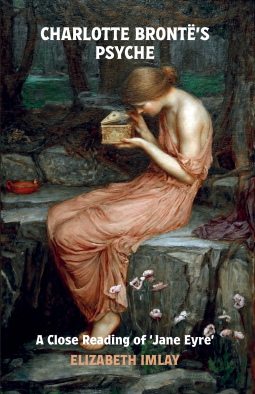
Charlotte Brontë's Psyche
A Close Reading of 'Jane Eyre'
This title was previously available on NetGalley and is now archived.
Send NetGalley books directly to your Kindle or Kindle app
1
To read on a Kindle or Kindle app, please add kindle@netgalley.com as an approved email address to receive files in your Amazon account. Click here for step-by-step instructions.
2
Also find your Kindle email address within your Amazon account, and enter it here.
Pub Date 20 May 2026 | Archive Date 3 Jul 2026
Aurora Metro Books | River Light Press
Talking about this book? Use #CharlotteBrontësPsyche #NetGalley. More hashtag tips!
Description
Did Charlotte Brontë transform the ancient tale of ‘Cupid and Psyche’ into one of literature’s most enduring novels?
In this compelling study, Elizabeth Imlay argues that ‘Jane Eyre’ is a bold reworking of fairy-tales, recast through the consciousness of a 19th-century woman seeking passionate love. By tracing Jane’s symbolic journey through earth, air, fire, and water—body, spirit, passion, and reason—Imlay reveals how Brontë reshapes the story through a feminist lens, redefining love as a unity of the spiritual and the physical, making ‘air’ a female element.
Advance Praise
“...really enlightening... It allowed me to more deeply understand the inner workings of Brontës thoughts and personality as it provides extracts from her personal letters and works she wrote in her childhood as young as 16. “ ****
“This is the most intriguing, thought-provoking and surprising book I’ve ever read... Fresh insight, indeed, and highly original scholarship.” ****
Marketing Plan
Talks
blog tour
social media
advertising
Talks
blog tour
social media
advertising
Available Editions
| EDITION | Paperback |
| ISBN | 9781068467424 |
| PRICE | £15.99 (GBP) |
| PAGES | 336 |
Available on NetGalley
Average rating from 13 members
Featured Reviews
 Tanja F, Reviewer
I had recently watched the film Jane Eyre and wanted to immediately read this book since I knew there was a subtext to what Bronte was trying to say with that story. I will confess that I have never read the novel, which makes my review of this book a more basic interpretation of the messaging.
The premise of this book is that Charlotte Bronte wrote an occult novel that initiated Jane through the 5 elements to achieve a state of union between her heart and soul. As Jane experiences the 5 elements, earth, air, fire, water, and the quintessence, through encoded symbolism at various points in the plot, she mirrors Charlotte Bronte's own awakening to the romance of spirit. Elizabeth Imlay decodes the symbols and hidden meanings of various characters, events, people, places, and things throughout the story to show how everything was deliberately written by Bronte to expound her supposed research and knowledge of the occult- alchemy, neo-platonism, freemasonry, and mythology to name a few. Imlay relates Jane Eyre to the Cupid and Psyche myth, which is an allegory for the union of heart and soul. At some points in this book, it seems as though Imlay is trying to fit Jane Eyre into her theory instead of providing solid evidence of the thesis, however, if the whole point is that Jane Eyre is a carefully crafted metaphysical novel, than not everything will be surface level.
The passion and love the Elizabeth Imlay has for this novel is obvious, with her in depth research and analysis a huge undertaking. I appreciate the connections made between the spiritual and physical, and although we may never know the true meaning of Jane Eyre as intended by Charlotte Bronte, one thing we do know, is that there must be a deeper reason why the story continues to live on. If Elizabeth Imlay's theory is true, then Jane Eyre represents the quintessence of spirit- the philosopher's stone of immortality.
 Ronan K, Reviewer
The passion the author has for this topic came through strongly. I did feel a bit lost myself as it’s been quite a while since I’ve read Jane Eyre. However it was incredibly interesting regardless and I found myself increasingly interested!
 Bailey C, Reviewer
I had never read Jane Eyre before because I’ve always been a little intimidated by it, but reading this book and experiencing the passion someone else had for the story makes me want to! The author does a great job of analyzing the book and making the analysis accessible and easy to understand
 Reviewer 1359021
Thank you to the publisher and NetGalley for providing this ARC!
This book was an eye opener. I think Charlotte Brontë would've been delighted to have a reader analyzing so closely her work, in this case, Jane Eyre. She struggled with loneliness and not feeling understood, and yet, this author understands exactly Charlotte's ideas.
This book makes me super excited to re-read Jane Eyre through different lenses, ones that contemplate the myth of Eros and Psyche (while also remembering details of Venus, Hephesthus and Ares), classic fairy tales and also, autobiographical details like Charlotte's own battles with passion and reason.
I never connected this ideas while reading the book because as a fan of Charlotte Brontë, I kept her in a pedestal that read: "phenomenal writer of masterpieces", and that still holds true, but now, I have discovered a new side of her that I never contemplated, her side as a reader, as a lover of tales, myths and ideas and how complete my picture of Charlotte feels now!
In my utter fascination with Jane Eyre and it's author, I never once thought of it as the crafted art it was, only as complete inspiration and unique talent.
Besides my praise for the book and Charlotte Brontë, I want to praise the author of this book for how thoroughly she investigated, but also, how wonderful she was at making all her research seem simple for the reader of this book to absorb. I was never bored nor desinterested while reading this book, quite the opposite, I was sad to finish it. I can only say that I hope the author writes more books like these (about Emily and Anne Brontë, a biology of the Brontë family or even of Elizabeth Gaskell) because they would be a complete delight to read.
 Katie E, Reviewer
Imlay takes us on an in-depth journey through the deeper references weaved through Jane Eyre, and my understanding of the novel feels all the richer for it.
Jane Eyre is quite possibly my favourite book of all-time. So when I saw this title on NetGalley, I snapped it up. And I'm so glad I did - Imlay does a fantastic job of outlining how the reading, beliefs and cultural understanding the Brontës were exposed to has coloured their writing.
Covering the titular tale of Cupid and Psyche, fairytales, Plato and more, 'Charlotte Brontë's Psyche' is a well-researched and thorough examination of the writer's work. It covers so many concepts around approaches to religion and morality that influenced the events of the book, along with literary and mythological allusions that I never knew haunted the pages.
It has been a fascinating read, and it has made me appreciate my favourite story on a whole new level.
Ellen A, Educator
Charlotte Brontë's Psyche: A Close Reading of 'Jane Eyre'
by Elizabeth Imlay
Elizabeth Imlay has written a fascinating study of Charlotte Brontë’s Jane Eyre. Her work is an intensive examination of how Brontë used the myth of Eros and Psyche throughout the novel. Imlay also tracks and describes some of the many sources Bronte (who was both a precocious and voluminous reader and who read serious works from an early age) drew upon. Imlay situates her reading of Jane Eyre primarily in mythology—specifically the story of Psyche and Eros (as one might guess from the title) but also integrates many other areas of culture and scholarship—Free Masonry, philosophy (specifically in several places Plato and Platonism but also German and French philosophers), poets, popular culture, and her own personal experiences.
Imlay lays out the structure of the book, dividing it into four sections—the first two sections rooted primarily in the feminine and maternal (in both positive and negative aspects) to the masculine (with Rochester representing fire and eros and St. John Rivers intellect and water—often water frozen by reason into ice). Imlay also presents the ways in which the elements of fire, earth, air (the primary example being, of course, Jane’s last name) and as already mentioned, water are used to create depth and meaning in the novel.
I was overwhelmed by the profusion of citations and quotes. Imlay’s knowledge of the many sources Brontë drew inspiration from and utilized in weaving together the themes of her novel is immense. I was unprepared for how scholarly this work is and it was a slow read for me—and even so, I think that to do it justice, I should reread it even more slowly.
My major complaint will probably seem to be minor to most people: Imlay refers to Bronte by her first name. No one talks of Charles (for Dickens) or William (for Shakespeare) and it seems to me demeaning. Yes, there are other Brontes but it is easy enough to refer to them by their full name – there are not so many references to them as to make that a burdensome task.
But, as I said, a minor point which does not prevent this from being a fascinating and illuminating study. I have a much greater understanding and appreciation of a book which is already a favorite of mine. I have already begun to reread the novel—with new perspectives, insights and understanding which I am already excited about.
I want to thank NetGalley, Aurora Metro Books (River Light Press) and the author for providing me with a free copy of this book in exchange for an honest review.
Charlotte Bronte’s Psyche will be published June 30, 2026.
 Ana L, Media/Journalist
I want to say first of all that reading this book was an absolute treat. I love learning and always feel this itch in my brain that tells me it wants new information. This book was just what I needed to keep my brain happy for a while.
So the first thing we see is a note from the author explaining why there’s a new edition and I found that so interesting. It is true we don’t study the classics the way we used to and I would add that, as someone from a Spanish speaking country, we don’t study all classics either. So being mindful of that is really key when making a book like this one. Also, it’s true the way we engage with religion is different and as someone who doesn’t really know much about it, I appreciated that those themes were explained more in this edition.
There is also the issue with media literacy being the worse it’s been since free education is available for most. Clearly, most people need things explained to them. So that’s something that this new edition might help with.
When I first read Jane Eyre, I was so pleasantly surprised. I found it to be yet another classic that felt so ahead of its time. I loved the way some themes were presented and even if they weren’t always developed in a perfect way, I understood it was because of when the book was written. The culture of the time cannot be dismissed when analysing classics because seeing them through a modern lens is just unfair. So my second surprise came when I saw a lot of people who tend to read critically bashing this book. It was sexist and it was racist and it was this and that…I mean, it wouldn’t be news that classics include things that can be offensive if seen through that modern lens I mentioned. But Jane Eyre wasn’t one I would put in that category, personally. I appreciated how this book points out the novel has been criticised since it came out. And how the criticism can go from it’s too feminine to not feminine enough, which I guess explains how even modern readers can have such different opinions about the same text. A text which is complex, as the author points out. And all Brontë sisters had to put up with the whole “because it’s written by a woman, let’s just call it a romance and move on” when their novels are so full of great themes. “Wuthering Heights” still being called a love story in 2026 kind of says it all.
The criticism contradicting each other since the novel was first published is such an interesting event, I loved learning more about it. And I have to say this book only solidified my view of the book being ahead of its time. I didn’t know about the comments that said this was basically Charlotte’s story with different names and that was very interesting to read about.
This being used as a bit of a guide to understand Jane Eyre better is such a great tool and I wish I had the same kind of book for every classic I read. Because if these books survived the test of time, it’s because there is more substance to them than just a simple story. So getting to know more about the author’s background and what could have influenced her was fantastic. This book goes into so much detail and really made me feel so silly at points. Because when I think about the classic tales that are really old, I don’t always stop to think about when they came out. I just know they’re old but for authors who lived 200 years ago, maybe those tales were contemporaries. Or maybe they came out after they died. So I appreciated this author taking the time to analyse which of those stories could have been available to Charlotte.
I read this fairly quickly but I don’t find this is a book to read fast. It’s a book to consume slowly and appreciate all the different details that it offers. It’s a book I’ll have by my side whenever I reread Jane Eyre.
It’s true that it goes into a lot of detail and maybe some people prefer a more surface level analysis but I don’t. Better to have a lot of information than not enough.
Definitely a book I would mention to everyone who’s interested in reading classics but also to those who might feel a bit scared to do so.
 Louise G, Reviewer
This book will serve fans of Jane Eyre very well as it is like experiencing a new way of interpreting and enjoying the original text. The author’s insights made me rethink a lot of my own thoughts about the book and this is always a good thing The writing style is a little bit like a school paper at times, but the enthusiasm for the topic more than makes up for this.
 Marilia P, Reviewer
I wanted to reread Jane Eyre (my favorite book for more than 25 years) and this was the occasion!
A great reflection about Charlotte Brontë and her characters, it made me understand some things differently and it has some history about the author and the publishing of the book.
Excellent analysis.
Reviewer 880389
Charlotte Brontë's Psyche by Elizabeth Imlay is an immersive reading of Jane Eyre. As someone who does not read enough classical literature, I appreciate the task Imlay set for herself and the way in which she executed it. The overall text is informative without being dry, and entertaining for even a casual reader. I had no issue with the direction of the research and application of the theory Imlay chooses to employ for her exploration. I will watch for more from this author and read Jane Eyre again to see if I can follow it better.
Thank you to NetGalley and the publisher for access to this eARC.
Readers who liked this book also liked:

Ben Devlin
Literary Fiction, Mystery & Thrillers, True Crime

Céline Fitzmaurice
Biographies & Memoirs, Mystery & Thrillers, True Crime
Tony Castro
Biographies & Memoirs, Entertainment & Pop Culture, Nonfiction (Adult)
Eileen Cope
Biographies & Memoirs, Entertainment & Pop Culture, Nonfiction (Adult)

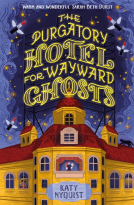
Katy Nyquist
General Fiction (Adult), Mystery & Thrillers, Sci Fi & Fantasy

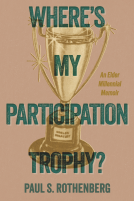
Paul S. Rothenberg
Biographies & Memoirs, Entertainment & Pop Culture