August
We Carry What We Bury
Sign In or Register Now to see if this title is available for request.
Buy on Amazon Buy on Bookshop.org Buy on WaterstonesSend NetGalley books directly to your Kindle or Kindle app
1
To read on a Kindle or Kindle app, please add kindle@netgalley.com as an approved email address to receive files in your Amazon account. Click here for step-by-step instructions.
2
Also find your Kindle email address within your Amazon account, and enter it here.
Pub Date 2 Jun 2026 | Archive Date 15 Feb 2027
Description
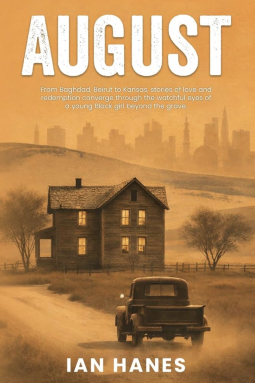
August is a quiet, shimmering novel told by a young Black girl whose life ended before she could grow into it. From the hush beyond the living world, she watches the boy she loved move through the ache of her absence, and the child who will rise in the space she left behind. Her voice drifts like light over water — tender, restless, unable to let go of the futures she will never touch.
Crossing Baghdad, Beirut, and the small towns of Kansas, the story moves through memory, longing, and the soft, persistent pull of unfinished love. It asks what remains when a life is interrupted, and whether the heart can still guide those we once held close, even after the world has carried on without us.
For readers of Jesmyn Ward, Celeste Ng, Douglas Stuart, and Hanya Yanagihara, August offers an intimate, atmospheric portrait of love, loss, and the invisible threads that bind us long after we’re gone.
Available Editions
| EDITION | Paperback |
| ISBN | 9798950750250 |
| PRICE | £13.99 (GBP) |
| PAGES | 268 |
Available on NetGalley
Available to Buy
Buy on Amazon Buy on Bookshop.org Buy on WaterstonesAverage rating from 3 members
Featured Reviews
 lily c, Reviewer
# Book Review: *August: We Carry What We Bury* by Ian Hanes
Rose Carter doesn't get out of the way in this one. She narrates from the other side of it, and Hanes leans into that risk — a dead woman explaining the living to us — fully aware readers will hear Alice Sebold's *The Lovely Bones* underneath it before page thirty. What keeps it from tipping into pastiche is tone. Less elegiac hush, more a woman still capable of an eye-roll. She reports on August the way you report on someone you knew too well to be precious about.
August Harper himself is a familiar shape in rural American fiction — the grief-rationed man who trades a future for a farm, closer to Kent Haruf's Colorado ranchers than to anything invented fresh here. Hanes doesn't try to reinvent that archetype; he trusts the reader already recognizes it, and spends his pages instead on what disrupts the pattern: an abandoned infant showing up in a life that had organized itself around not wanting anything new. That's the stronger choice. The interest isn't in August's silence — silence is the default setting for this kind of character — it's in what has to give for him to speak again.
The harder swing is Layla, an Iraqi-Lebanese woman whose story runs through war, displacement, and the 2020 Beirut port explosion, which killed more than 200 people and leveled entire neighborhoods. Braiding a documented mass-casualty event into a novel built around private, invented grief isn't a neutral craft choice — it's a real risk. Handled carelessly, a real catastrophe becomes set dressing for someone else's emotional arc. Whether Hanes earns the connection, makes Layla load-bearing rather than illustrative of a theme the American plotline already needed, is the more useful question to sit with while reading than whether the prose is lyrical.
And that's the real structural bet of the book: three narrative registers — afterlife narration, quiet-man farm plot, geopolitically specific displacement story — each with its own genre gravity, running in parallel. That's ambitious math. The seams show most in the tonal jump between Rose's wit and the weight of Layla's material; not because either thread is weak on its own, but because the book is asking a reader to hold two very different registers of grief in the same hand without asking them to rhyme.
What the novel earns isn't atmosphere — it's refusal. No tidy arc, no forgiveness arriving on schedule. It rewards readers willing to let loss stay unresolved rather than explained, and it's most convincing exactly where it resists its own instinct toward warmth.
 Account D, Reviewer
Rose Carter doesn't get out of the way in this one. She narrates from the other side of it, and Hanes leans into that risk — a dead woman explaining the living to us — fully aware readers will hear Alice Sebold's The Lovely Bones underneath it before page thirty. What keeps it from tipping into pastiche is tone. Less elegiac hush, more a woman still capable of an eye-roll. She reports on August the way you report on someone you knew too well to be precious about.
August Harper himself is a familiar shape in rural American fiction — the grief-rationed man who trades a future for a farm, closer to Kent Haruf's Colorado ranchers than to anything invented fresh here. Hanes doesn't try to reinvent that archetype; he trusts the reader already recognizes it, and spends his pages instead on what disrupts the pattern: an abandoned infant showing up in a life that had organized itself around not wanting anything new. That's the stronger choice. The interest isn't in August's silence — silence is the default setting for this kind of character — it's in what has to give for him to speak again.
The harder swing is Layla, an Iraqi-Lebanese woman whose story runs through war, displacement, and the 2020 Beirut port explosion, which killed more than 200 people and leveled entire neighborhoods. Braiding a documented mass-casualty event into a novel built around private, invented grief isn't a neutral craft choice — it's a real risk. Handled carelessly, a real catastrophe becomes set dressing for someone else's emotional arc. Whether Hanes earns the connection, makes Layla load-bearing rather than illustrative of a theme the American plotline already needed, is the more useful question to sit with while reading than whether the prose is lyrical.
And that's the real structural bet of the book: three narrative registers — afterlife narration, quiet-man farm plot, geopolitically specific displacement story — each with its own genre gravity, running in parallel. That's ambitious math. The seams show most in the tonal jump between Rose's wit and the weight of Layla's material; not because either thread is weak on its own, but because the book is asking a reader to hold two very different registers of grief in the same hand without asking them to rhyme.
What the novel earns isn't atmosphere — it's refusal. No tidy arc, no forgiveness arriving on schedule. It rewards readers willing to let loss stay unresolved rather than explained, and it's most convincing exactly where it resists its own instinct toward warmth.
louisa t, Reviewer
Oh August.
He really did steal my heart a bit.
When the other stories came in, I just wanted to go back to Kansas
They won me over however, and here at the end of the book I find myself a bit emotional.
Beautifully written, with characters that will stay with you a while.
Lovely.
Readers who liked this book also liked:



Laraine Stephens
General Fiction (Adult), Historical Fiction, Mystery & Thrillers