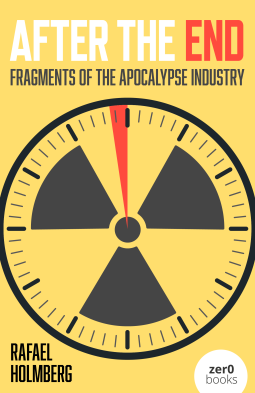
After the End
Fragments of the Apocalypse Industry
You must sign in to see if this title is available for request. Sign In or Register Now
Send NetGalley books directly to your Kindle or Kindle app
1
To read on a Kindle or Kindle app, please add kindle@netgalley.com as an approved email address to receive files in your Amazon account. Click here for step-by-step instructions.
2
Also find your Kindle email address within your Amazon account, and enter it here.
Pub Date 29 Sep 2026 | Archive Date Not set
Talking about this book? Use #AftertheEnd #NetGalley. More hashtag tips!
Description
The end of the world and the end of capitalism reinterpreted via theology, science fiction, and philosophy
Description? help
The motto of capitalist realism, that “it is easier to imagine the end of the world than to imagine the end of capitalism”, is no longer accurate. One lesson from science fiction, the doomsday clock, or even ecological speculations, is that thinking the end of the world appears impossible. Today’s apocalyptic projections of economic-ecological disasters repeat the same problem as older religious eschatology: no consensus on apocalypse is possible, and the very act of imagining the end of the world only obscures it.
We have failed to think the end of capitalism and the world because we have failed to understand the end as such. There is an ontological and ideological contradiction inherent to the meaning of the end. As this book argues, the paradoxical expressions of limits and finitude are latent within a philosophical-literary-theological history covering Thomas Aquinas, Kant, phenomenology, science fiction, post-structuralism, psychoanalysis, and political theory.
The dominant ‘apocalypse industry’ exploits this self-obscuring end. Looking at the volatility of aggressive techno-capitalism with its neoliberal and populist deviations, this book argues that modern political economy weaponizes and manufactures the end in order to occupy both sides of it. Our social and political predicament reflects an obfuscation and commodification of ‘endings’, and this book is therefore a political and philosophical attempt at theorising the end.
Advance Praise
Rafael Holmberg’s After the End challenges much of the contemporary political doxa when it comes to the question of the end of capitalism and the end of the world. Rather than accepting the truism that we should politicize ontological questions, Holmberg proposes the daring wager that what we really require today is treating political questions—such as the end of capitalism—through an ontological lens. Until we confront politics philosophically, we will remain stuck in the same political dead ends. It’s a book that forces whole new lines of thought.
Todd McGowan
The indefinability of “the end” will endlessly haunt any reader of After the End. Does any attempt - theological, political, ecological - to pronounce an end dissolve into its own repetition? Does apocalypse cancel itself out through perverse self-perpetuation? The reader will finish the book, but fail to be done with Holmberg's enigmatic meditation.
Catherine Keller, George T. Cobb Professor of Constructive Theology, Drew Theological School. Author of Facing Apocalypse: Climate, Democracy and Other Last Chances.
Available Editions
| ISBN | 9781806951727 |
| PRICE | |