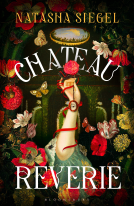
Eat Bitter
A Story About Guts and Food
This title was previously available on NetGalley and is now archived.
Send NetGalley books directly to your Kindle or Kindle app
1
To read on a Kindle or Kindle app, please add kindle@netgalley.com as an approved email address to receive files in your Amazon account. Click here for step-by-step instructions.
2
Also find your Kindle email address within your Amazon account, and enter it here.
Pub Date 14 May 2026 | Archive Date 13 Jun 2026
Random House UK, Vintage | Chatto & Windus
Talking about this book? Use #EatBitter #NetGalley. More hashtag tips!
Description
A beautiful and fearless exploration of food and feelings – with bite – for fans of Crying in H Mart and Midnight Chicken.
‘Touching, absorbing and unflinching… shows you how to stomach life’s shit, celebrate the ugly, and keep going' Angela Hui
Eat bitter is a Chinese proverb meaning ‘endure hardship to taste sweetness.’ For Lydia Pang, it embodies the struggles of her Hakka ancestors, a persecuted Chinese ethnic group whose ingenuity shaped a food culture rooted in fermenting and foraging.
Pang reimagines eating bitter as a philosophy to confront her own challenges: burning out, testing her marriage, navigating fertility struggles and caring for a parent. Through eight recipes, she shares food as memory and medicine: the silly egg noodles her father cooked when her sister was ill, the bone broth she boiled in New York while homesick and courgettes grown in rural Wales as a gesture of reconnection.
Available Editions
| EDITION | Other Format |
| ISBN | 9781784746308 |
| PRICE | £18.99 (GBP) |
| PAGES | 304 |
Available on NetGalley
Available to Buy
Buy on Amazon Buy on Bookshop.org Buy on WaterstonesAverage rating from 53 members
Featured Reviews
 Media/Journalist 220505
Eat Bitter is the Hakka Chinese principle of enduring hardship so we can recognise and celebrate sweetness when it comes. Pang's book is structured into eight chapters beginning with a recipe that encapsulates the journey towards insight into difficult ('bitter') experiences and how they helped her move forward. It's an interesting and easy-to-follow methodology. Pang role models self-compassion without indulgence (she is clear-eyed and unapologetic); I love her writing.
 Lucy E, Reviewer
Bitter by Lydia Pang explores the Chinese concept of “eating bitter” and what that means in the context of food, memory and ancestry. It looks at the importance of food, and food gestures, and how these shape who we are.
This book explores Hakka Chinese and their history, which I was pleased about, as I’ve read many books about China and food over the years and this added to my knowledge. I enjoyed reading about the creative, distinct ways of cooking that are embedded in Hakka ancestry, not just as recipes but in highlighting the healing power of food. It encouraged me to think about my own nostalgic dishes and how I eat as well as what I return to, and why.
Pang's writing is self-aware and emotionally attuned. Intelligent, measured and considerate. Elegantly written and thoughtfully structured, with eight recipes at the start of each chapter, which I appreciated.
A reflective book about endurance, rituals and the quiet power of food which I wholeheartedly recommend. I received a free advance review copy and this is my honest review.
 Sudeshna B, Reviewer
If you, like me, fell deeply in love with "Crying in H Mart," then I highly recommend "Eat Bitter" by Lydia Pang. It is a tender, honest, and powerful read. Hakka history, family recipes, and the author’s struggles with burnout, marriage, and fertility come together to create a nourishing read that is like sitting down to a pot of simmering soup with a friend, only the friend has a way with words that is comforting, brave, and will stay with you long after the last page has been turned.
 Francesca K, Bookseller
I didn’t know much about Lydia Pang before reading this but now I think she may just be one of the coolest people out there. I am a huge fan of exploring relationships and memories through food and the ethos of eating bitter is a really interesting concept. This is personal and powerful and ultimately it is a delicious read.
Book Trade Professional 1098582
This was not only a very educational read on Hakka culture but also incredibly immersive. Pang's descriptions of food and memory jump out of the page at you and cause reflection. I will certainly be recommending this book!
 Karen J, Reviewer
It was a very good read and I learned a lot about different cultures and how they interact with other people.
The recipes are good and heartwarming.
 emilie g, Reviewer
Lydia Pang is a very cool woman. I googled her after I read this and came across her instagram.
It's fascinating to read of just how much food can influence a person and their culture when I myself am not a food driven person at all. And I guess that's the whole idea. You don't have to be driven by food for it to have a long lasting impact on various areas of your life. It was very bittersweet in places but delightful to learn about Lydia and her ancestry and how food has changed the way she perceived hardship.
It does get a little preachy at times though and that's my only negative feeling. I don't want to be preached at when I read a memoir; I just want to learn.
Reviewer 1995635
Amazingly well-written throughout, through the ups and downs of her life, and how she conveys these to the reader through her love of food. Most importantly, how she talks about her family's culture and how she still represents and learns about it throughout her life really adds amazing depth to the story.
Catherine J, Reviewer
This is an eviscerating, visceral, pungent read - all adjectives that I’m sure Pang would approve of! I gulped this down in 2 sittings: it was too good to savour slowly, so good that I’ll be doing a re-read. So much resonated with me and inspired me, not least the bravery of the author in recognising that their philosophy for life - the titular ‘eat bitter’ - required fine-tuning. The reflections on Welsh culture and dual heritage reminded me of Angela Hui’s Takeaway: Stories from a Childhood Behind the Counter (which I also enjoyed), but Pang moves beyond Wales in her expansive odyssey across continents and life stages. I wish I could taste the recipes described here, even though (or because) they are so unique to the author’s family table. Best read with a comforting congee set to warm in the rice cooker.
Librarian 201634
"Eat Bitter" is a Hakka Chinese concept centred on enduring hardship to ultimately savour the sweetness that follows. Lydia Pang adopts this principle to reflect on pivotal moments and relationships in her life, seeking understanding, acceptance, and a path forward. Each chapter opens with a recipe that captures a significant memory or experience, which she then explores by delving into the challenging aspects of that period and how she learned from them. Pang does not shy away from life's tough, complex realities, often sharing her experiences with striking honesty.
 charlotte d, Reviewer
This was a deeply personal book and I loved it. It’s beautifully written and I really felt like I delved into the authors personal life
 Cary M, Reviewer
Thank you to Netgalley and the team at Random House, Vintage for the ARC
I know for a fact this book will stay with me for a long time. This book feels revolutionary, not demanding an immediate response as we are so used to doing in every piece of media we consume. Pang demands us to fester in the unknown, in the pain, the longing, to find acceptance in the messy and ugly. This came to me at the right time as I come to terms with my chronic illness and forcing myself to slow down - those chapters of Lydia’s burnout rang so true for me. While at times repetitive, I don’t necessarily believe it as a bad thing. It adds to the flow of experience this book wants us to have.
There were a couple of mistypes that I’m sure have since been edited out.
Linda F, Reviewer
Lydia Pang’s heritage is in the Hakka culture, a persecuted Han Chinese sub-ethnic group, with a rich culinary tradition. The Hakka food culture is robust, savoury and aromatic, rooted in the resourcefulness and resilient nature of the Hakka people. Lydia embodies her culture and cuisine whole-heartedly in this memoir with her eight food choices. There’s a recipe at the start of each chapter which is integral to the story Lydia recounts. She highlights the food as she deals with sadness, trauma and all the difficulties and complexities of life. Her grandparents, her relationship with them, and the food that they cooked was immensely important to her. “Eating bitter” means enduring hardship to appreciate future sweetness. A thought-provoking memoir.
 Anna B, Reviewer
Thank you to Lydia Pang, Random House UK, Vintage | Chatto & Windus, and NetGalley for the e-arc in exchange for an honest review.
Eat Bitter is an interesting mix of biography, literary fiction, and a cookbook. Each short story / experience is folded between recipes filled with feeling. Would recommend!
 shanine s, Reviewer
A beautiful story showcasing how food and culture was used to deal with trauma, sadness and difficult situations. I loved the food recipe inserts and the explanations of the background of why these recipes were used in this book. Although this book has deep insights of traumatic things people may face in day to day life I liked how the concept wasn’t brought in a negative way & more in a F it kind of situation. especially the last chapter I loved how it all linked together as it became a reflection on what she had been through and how that shaped her into the person she has now become. I enjoyed reading this book and it does make you reflect and reference parts of your own life. I would recommend
Educator 388984
Lydia Pang is so impressive- her studies, her career, and if you look her up and find pictures, she simply looks like the coolest person who ever lived. And she wrote a very good food memoir... one of my favourite types.of memoirs. Drawing on her Hakka heritage, she writes lovingly about her family, her eccentric parents, her grandparents recipes and growing up in Wales. Because she is also a millennial, there's a lot I recognised myself in, and I found the whole collection of essays very touching and well-written. The recipes (there's one at the start of each chapter) sound very appealing and I loved the writing, despite finding at times that it started to read a bit too much like self-help.
 Katy W, Reviewer
Eat Bitter is the Hakka Chinese principle of enduring hardship in order to celebrate sweetness when it comes. Lydia Pang uses this as a way to look at key events and relationships in her life and attempt to piece together understanding, acceptance and some kind of roadmap for the future. Each chapter starts with a recipe that encapsulates a time or experience for her and she then unpacks and meditates on how she worked through the bitter, difficult elements in that chapter of her life and came to understand them and use them going forward. She embraces and expounds on the knotty, unpalatable complexities of life and is at times unnervingly frank about her experiences which give this book a darkly edgy feel which is entirely in keeping with the themes and central idea of it.
 Jen R, Reviewer
Thank you to the publishers and NetGalley for this arc.
I requested this after seeing it described as similar to one of my favourite memoirs, Crying in H Mart, and I’m so glad I did. I didn’t know a thing about Pang but, through storytelling and recipes, I got a good idea about who the writer is — as well as what the concept of “eat bitter” means for life.
It was very detailed and slightly repetitive at times but I related so much to how food and memories interlock and I felt emotional (and hungry) throughout reading.
 Jessica G, Reviewer
"‘eat bitter’, which means to endure hardship before tasting sweetness."
This was a surprisingly good read for me! As much as I appreciate a nonfic, this was different to the usual types I'd usually sway towards so I didn't have my expectations too high but I really did enjoy this.
This is definitely one for foodies & those who might want a different take on a self help book. I found this to be deeply insightful & reflective; I think each chapter will resonate with different readers respectively, there's something for everyone & anyone to take from this which I think is great. I especially loved all the food metaphors dotted among each chapter as well as learning more about the Hakka & Chinese culture. Self help books are not my go to at all & though this felt like one, especially toward the end, the way this is written helped me enjoy it & I came away feeling inspired & unexpectedly moved whilst also wanting to read more of Pang's writing.
Admittedly, I only requested this for the cover (I'd also assumed it was a fiction somehow), but I'm glad to have enjoyed this way more than I'd anticipated & it's definitely a book I'd recommend to any nonfic reader.
Thank you Vintage & Netgalley for my free eARC!
Josephine G, Reviewer
This might be my favourite book of the year so far. The author examines the Chinese proverb “eat bitter” meaning “ensure hardship to taste sweetness.” Using her own experiences growing up and living with her mixed Chinese/Welsh family, and, crucially, detailing 8 recipes, she explores food and the act of cooking as medicine. This might make it sound like any self help book but it is not. The author is wonderful at weaving in her own personal stories while looking at how they can be applied to the philosophy. It is brutally honest, extremely relatable and hopeful without providing all the answers. And I would love to try some of the recipes! Overall, I found it incredibly moving and will be both recommending it to and buying it for friends.
Thank you to NetGalley and the publisher for the opportunity to read this book.
Helen W, Educator
Much nodding went on during the reading of this book!
I had never heard of Lydia Pang before I read this book but her memoir resonated with me in so many ways. As someone whose love language is food, lives in a 'foreign' country and has raised children bi-culturally with a big focus on cooking and sharing meals I was hoping it would be just my bag - and it was!
What really worked for me was the way Pang writes about food as something far bigger than nourishment. It becomes memory, comfort, care, grief and love all tangled together. The idea of “eating your emotions” is nearly always treated as something negative, but Pang reframes it as a way of surviving, connecting and caring for people when words aren’t enough.
We learn about the author and her family, but more specifically the Hakka culture and the concept of “eating bitter” — enduring hardship before sweetness arrives. The language throughout is bold and inventive, full of memorable food metaphors that somehow never feel overcooked.
Some of the parts focussing on her professional life dragged slightly for me and felt a little repetitive in places, but those moments never lasted long before another brilliant observation or description pulled me back in.
Thank you for entreating us to get rid of our 'good-girl giblets' and avoid ‘performing a microwaved life’, We should allow ourselves to be vulnerable and honest, and let food and family help us survive the more unpalatable moments of life.
 Alex M, Reviewer
4.25 ⭐
DIG IN!
I'm not gonna lie when I say I was expecting fiction but it turned out to be so much better than I had thought of.
Eat Bitter ended up just being a read that I literally devoured over a few days and I honestly needed something like this right now.
The writing is amazing in the sense that I'm learning about Lydia, the history and culture of the Hakka people, I'm thinking of what food I can use as a memory and healing and which ones bring up feelings of grief due to memories who they are about but also let the good memories seep in also to try and make sure they are also remembered, not just the bad.
Such an interesting read that I really enjoyed. The last line 🖤 yeah.
I tabbed each recipe/chapter which the red, annotated with my burgundy pen as I had to match looool 🤣
 Pudsey R, Reviewer
There are books you admire, and books that get inside you. Eat Bitter by Lydia Pang does both, and does them with such unapologetic confidence that you barely notice it happening until you’re already somewhere deep in its guts.
This is a food and life memoir structured around eight recipes, each one an entry point into a formative or “bitter” experience in Pang’s life. Hakka heritage, burnout, New York ambition, marriage, grief, fertility, caregiving. The concept sounds neat, maybe even gimmicky, until you’re actually in it and realise that Pang has no interest in neat. What she has is precision. “Psychotic exactitude”, actually, which is the phrase I kept coming back to. She’s an extraordinary stylist: funny, brutal, wildly assured, and unafraid to be genuinely uncomfortable. If only I could have an ounce of her wit.
The book opens by introducing the Hakka concept of “eating bitter,” an idiom for enduring hardship with humour before you get to taste sweetness. As Pang puts it:
“Eating bitter is a pause for us to pick truth from our teeth. It’s a belly full of contemplation. Here there are no rules, no judgement, no skills required. Anyone hungry for surrender can sit around this table.”
The idiom becomes Pang’s methodology for the whole book, and it earns it. She’s not offering a self-help formula. She’s not tidying her life into digestible lessons. She’s arguing for a more confrontational relationship with food, with memory, and with yourself:
“Not all familial recipes taste of ease and holiday memories, some of them taste like struggle or generational trauma or even pain. In those shared cooking moments, you’re opening up space for that pain to be held by someone else for a precious slice of time.”
Her writing on her grandfather’s char siu pork is some of the best in the book. The way she describes him cooking it, the days of preparation, the silent eye contact, the pork “swinging from the hooks like a horror movie prop, unapologetically claiming its place as the star of the scene”; it’s a love letter to heritage that never once goes soft. And the chapter where she cooks wishbone tuna for her mother during chemotherapy? It moved me to bits. She didn’t Google the recipe. She didn’t plan it. She just chose ingredients that “felt special” and that she knew had “healing properties,” that would hold her mother inside her safe space. Her mother recalls it as one of the most significant meals of her life. She walked in with a heavy tray and a smile, and her mother smiled back. Four sentences that wreck you.
There’s a brilliant thread running through the book around what Pang calls “deepening your weird.” Rooted in her Hakka identity (the Hakka being a historically displaced, migrant people, known for making a living from difficult land), she traces her own journey from smoothing out her edges to owning them. The chapter about her emo phase and the friend who saw her chewy bits, backed her weird clothes, and told anyone who laughed at her to leave, it’s joyful and specific and quietly devastating in the way that only the most precise personal writing can be.
She is also, crucially, furious. There’s a current of real rage running beneath the memoir’s warmth, directed squarely at capitalism, at productivity culture, at the systems that want us “sedated, sedentary and singular.” The prose gets almost incantatory in these moments:
“We confuse being busy with being significant, and action with progress. This capitalist, colonialist, patriarchal-coded addiction is why we’re both the most ‘connected’ humans in history, and yet the most profoundly lonely.”
It could tip into polemic, but Pang anchors it constantly in the personal and the bodily. The burnout chapter, told through bone broth, is particularly good. The New York section, all Illamasqua black lipstick and cortisol and “all lipstick, no broth,” is enormously fun and rings painfully true.
My favourite conceptual move in the book is Pang’s distinction between surrender and settling. Eating bitter, she argues, is not about accepting defeat. It’s about active, gritty engagement with what is hard:
“Don’t confuse surrender with settling, or acquiescence. Settling implies stagnation, like sediments at the bottom of a teacup, without purpose or direction. Surrender, however, is wholly active. It requires grit and motion, a true deepening, because you’re surrendering violently under the knowledge that you’re moving through something.”
Eat Bitter is irreverent and deeply felt, a memoir that treats food as serious emotional and political material without ever losing its sense of humour or its hunger. It made me want to call my people, cook something difficult, and stop smoothing out my own edges quite so efficiently.
“Sik fan.” Go read it. #pudseyrecommends
Thanks to Lydia Pang, Random House UK, Vintage | Chatto & Windus, and NetGalley for the e-arc
 Claire R, Reviewer
Eat Bitter - Lydia Pang
The second I heard about Eat Bitter, it went straight to the top of my TBR. 吃苦 𝐜𝐡ī 𝐤ǔ, or ‘eat bitter’ is a phrase I grew up hearing because I grew up in Taiwan, spending lots of time with Chinese and Cantonese speakers.
吃苦 chī kǔ is a Chinese proverb that means to ‘endure hardship to taste sweetness.’ But it’s not just a proverb. It’s almost like a way of life. Something that Chinese people grow up with and fully understand, even if they can’t always explain it. Endure tough times without complaining, and eventually you’ll reap the rewards.
Eat Bitter is a story about Lydia’s life. Each chapter starts with a recipe, one that you can follow and try out for yourself (unless you’re vegan - lol), and we follow her story from a child in rural Wales to an adult who moves around the world in search of ‘her place’. Chasing dreams, money and security.
She talks about how her Hakka ancestors struggled through multiple forced migrations and how her grandparents settled in Hong Kong before moving to rural Wales without speaking a word of English. All of these experiences have stayed with Lydia and is part of who she is. But she’s also her own self. She talks about her teenage years, the emo stage (LOVE!), the refusal to conform (yay!) and other things.
As an adult, she faces burn-out, fertility struggles and more. Many of these things are relateable, so no matter what you’re going through or have been through, I’m sure parts of the book will resonate.
Despite having a strong interest in Chinese culture, what really kept me reading was Lydia’s brilliant, witty sense of humour that is drizzled throughout. She’s hilarious. Even when times are difficult.
Honestly, add this to your TBR. You won’t regret it.
 The Secret B, Reviewer
Eat Bitter by Lydia Pang is a deeply personal food memoir that uses recipes as entry points into stories of heritage, burnout, grief, marriage and identity, all shaped by the Hakka philosophy of enduring hardship to eventually find sweetness.
This is an incredibly sharp and emotionally honest book that feels both intimate and beautifully crafted. The structure built around recipes works brilliantly, allowing food to become a way of exploring memory, family and survival without ever feeling forced.
What stood out most was the writing itself. Pang’s voice is witty, incisive and unafraid to lean into discomfort, balancing humour with moments of real vulnerability. There is a confidence and precision to the prose that makes even small observations feel impactful.
I also appreciated how the book explores the idea of “eating bitter” beyond food, turning it into a wider reflection on endurance, ambition and care. The themes of burnout, fertility struggles and family responsibility are handled with honesty and depth.
The combination of cultural exploration and personal storytelling gives the memoir a strong emotional resonance, while the recipes and sensory details add warmth throughout.
A thoughtful, beautifully written memoir that blends food, identity and resilience in a powerful way.
Read more at The Secret Book Review.
Readers who liked this book also liked:




Dave Hunter
Entertainment & Pop Culture, Nonfiction (Adult), Outdoors & Nature
Jess Mills
Biographies & Memoirs, Nonfiction (Adult), Parenting, Families, Relationships