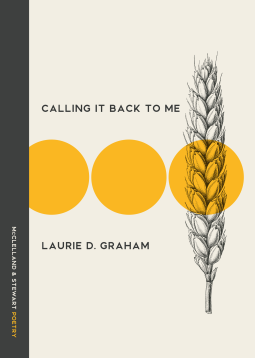
Calling It Back to Me
Poems
This title was previously available on NetGalley and is now archived.
Buy on Amazon
Buy on Bookshop.org
Buy on Waterstones
*This page contains affiliate links, so we may earn a small commission when you make a purchase through links on our site at no additional cost to you.
Send NetGalley books directly to your Kindle or Kindle app
1
To read on a Kindle or Kindle app, please add kindle@netgalley.com as an approved email address to receive files in your Amazon account. Click here for step-by-step instructions.
2
Also find your Kindle email address within your Amazon account, and enter it here.
Pub Date 24 Mar 2026 | Archive Date 24 Mar 2026
Penguin Random House Canada (Adult) | McClelland & Stewart
Description
A poet’s clear-eyed witnessing of familial history, this is the most personal collection yet from two-time Trillium Book Award finalist Laurie D. Graham.
In these searching, spare, and resonant poems, Laurie D. Graham traces the story of her great-grandmothers’ lives before and after they left their homelands and settled on this continent, striving to understand how she came to be here and writing the act of colonization as it exists in her own family history. This collection’s fractured lines, time-weathered yet alive with detail, reflect a family’s knowledge broken by global immigration and memory loss, both individual and collective. The result is a courageous reckoning with the legacy of leaving home.
With tender curiosity and a determination to bear unflinching witness, Calling It Back to Me asks: When language and memory are so tenuous, what is it that gets passed down between generations?
In these searching, spare, and resonant poems, Laurie D. Graham traces the story of her great-grandmothers’ lives before and after they left their homelands and settled on this continent, striving to understand how she came to be here and writing the act of colonization as it exists in her own family history. This collection’s fractured lines, time-weathered yet alive with detail, reflect a family’s knowledge broken by global immigration and memory loss, both individual and collective. The result is a courageous reckoning with the legacy of leaving home.
With tender curiosity and a determination to bear unflinching witness, Calling It Back to Me asks: When language and memory are so tenuous, what is it that gets passed down between generations?
Available Editions
| EDITION | Other Format |
| ISBN | 9780771023460 |
| PRICE | CA$25.00 (CAD) |
| PAGES | 112 |
Available on NetGalley
NetGalley Reader
(PDF)
NetGalley Shelf App
(PDF)
Send to Kindle (PDF)
Download (PDF)
Available to Buy
Buy on Amazon Buy on Bookshop.org Buy on Waterstones*This page contains affiliate links, so we may earn a small commission when you make a purchase through links on our site at no additional cost to you.
Average rating from 7 members
Readers who liked this book also liked: