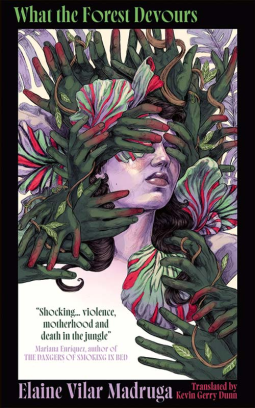
What the Forest Devours
with Kevin Gerry Dunn (Translator)
This title was previously available on NetGalley and is now archived.
Send NetGalley books directly to your Kindle or Kindle app
1
To read on a Kindle or Kindle app, please add kindle@netgalley.com as an approved email address to receive files in your Amazon account. Click here for step-by-step instructions.
2
Also find your Kindle email address within your Amazon account, and enter it here.
Pub Date 24 Sep 2026 | Archive Date 15 Oct 2026
HarperCollins UK, HarperFiction | The Borough Press
Description
Benedicta has given birth, over and over. But she will never be a mother.
Benedicta lives with her mother, her sister and her many children on a hacienda surrounded by dense rainforest.
The jungle is a hungry god: it allows them to live safely away from a ruthless world of guerrillas and drug traffickers, but at a terrible price. Its voracity is never-ending, and those who live under its control must offer up their children in a sacrificial cycle powered by blood and madness.
One day Romina, a pregnant sex worker from the nearest town, emerges from the rainforest. Will she be the one to break the cycle?
Brutal, powerful and deeply unsettling, this Caribbean gothic fable about motherhood and the female body is a truly unique and unforgettable novel, from a writer at the peak of her powers.
Available Editions
| EDITION | Ebook |
| ISBN | 9780008727161 |
| PRICE | £8.99 (GBP) |
| PAGES | 384 |
Available on NetGalley
Available to Buy
Buy on Bookshop.org Buy on Kobo Buy on WaterstonesAverage rating from 11 members
Featured Reviews
 Reviewer 1394760
Okay so What the Forest Devours by Elaine Vilar Madruga is one of those books I finished and immediately had to just... sit with for a minute. It's set on this hacienda in the Cuban rainforest, and the forest itself is basically a hungry god that the women living there have to keep "fed" through this horrifying generational cycle of sacrifice. I know that sounds like a lot, and it is a lot, but it works so well.
Benedicta is the heart of it for me. She's given birth again and again but never gets to actually be a mother, and watching her navigate that horror (and her own cruelty, honestly) is gutting. Then Romina shows up from outside the forest, pregnant and hardened, and you can feel the whole story tilt toward this question of whether the cycle can actually be broken.
It's gory and uncomfortable in places, not gonna lie. But it never feels gratuitous. Every awful thing happening is in service of these bigger ideas about motherhood, bodily autonomy, and what women get forced to give up just to survive. Vilar Madruga isn't interested in comforting you, and honestly I respected that.
Also shoutout to Kevin Gerry Dunn's translation. The prose has this feverish, almost hallucinatory quality that still manages to stay sharp and controlled. Nothing about it reads "translated," it just reads good.
If you're into literary horror that's weird, brutal, and actually has something to say, put this one on your list immediately.
 Andrija F, Educator
To pervert Ginsberg: "The world is holy! The soul is holy! The skin is holy! The nose is holy! The tongue and cock and hand and asshole holy!" Indeed, the whole world is Benedicta. Relentlessly bleak, it breaks pretty much every taboo along its disgusting path into an inverted world where flesh turns into meat, meat into cadaver, cadaver into decaying matter, and decaying matter into specter. I wonder what it feels like to stare so coldly into the always-already debased human condition as Elaine Vilar Madruga does, to live knowing that the hell envisioned by the world's religions is merely a waystation on the path toward an abyss of human making. Magnificent novel if you have a stomach for it - and why shouldn't you, that exactly what we live.
Dmitry P, Reviewer
The book is a rollercoaster of blood, carnage, sex, and mutilation. Previous books I've encountered in this vein have generally fallen into one of two camps: those that are so absurdly over-the-top that they become unintentionally entertaining (a la Danny Trejo films), and those that drown in excessive self-indulgence and gore for gore's sake. This book is different.
At its core is the story of a group of women living in a forest and trying to survive within it. The forest itself demands periodic child sacrifices, and the women have built their lives around maintaining this terrible equilibrium. That delicate balance is disrupted by a combination of factors: a new woman joins the group, one of the oldest children decides to rebel, and the matriarch begins to age and lose control of the situation.
On the surface, this is a story about women, cruelty, and madness. At a deeper level, it is about what environment, society, and women themselves do to other women, and the lengths to which they will go in order to survive. Despite its graphic depictions of mutilation, cannibalism, and child sacrifice, the novel is somehow suffused with hope and even admiration for female ingenuity and survival instincts.
It is a remarkable reading experience and well worth seeking out. The book reads effortlessly and is difficult to put down. There is an extraordinary energy emanating from it that I found genuinely awe-inspiring.
Naturally, this is not for the faint of heart.
My thanks to NetGalley and the publisher for providing me with an early copy of this book in return for an honest review.
Readers who liked this book also liked:

Zhang Guixing. Translated by Christopher Rea and Julie M. Wang
General Fiction (Adult), Historical Fiction, Literary Fiction

We Are Bookish
Historical Fiction, Literary Fiction, Multicultural Interest
Benoit Denizet-Lewis
Health, Mind & Body, Nonfiction (Adult), Religion & Spirituality

Kumi Makimura
Children's Fiction, Children's Nonfiction, Comics & Graphic Novels
Shari LaRosa
Children's Fiction, Children's Nonfiction, Parenting, Families, Relationships
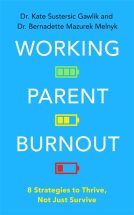
Kate Sustersic Gawlik; Bernadette Mazurek Melnyk
Health, Mind & Body, Parenting, Families, Relationships, Self-Help