On Reconciliation
What Israelis and Palestinians Can Learn from South Africa and Rwanda
This title was previously available on NetGalley and is now archived.
Send NetGalley books directly to your Kindle or Kindle app
1
To read on a Kindle or Kindle app, please add kindle@netgalley.com as an approved email address to receive files in your Amazon account. Click here for step-by-step instructions.
2
Also find your Kindle email address within your Amazon account, and enter it here.
Pub Date 6 Oct 2026 | Archive Date 25 Oct 2026
Plough Publishing | Plough Publishing House
Talking about this book? Use #OnReconciliation #NetGalley. More hashtag tips!
Description
All conflicts end. It’s in their nature. The only question is how much time and how many lives will be lost, and when the hard but necessary work of healing begins. Maya Savir, an Israeli professional in humanitarian and development work and peacebuilding, and a mother, spent years working in Rwanda and South Africa, countries that went through successful reconciliation processes many had thought impossible. In this book, she dares to ask whether what she observed and learned there can be applied to the Israeli-Palestinian conflict.
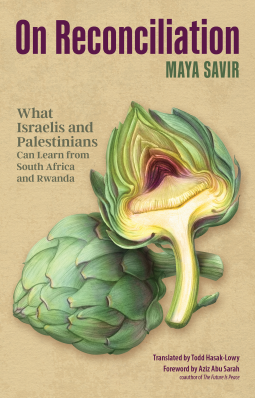
Reconciliation is an artichoke. It’s not an onion, made up of layer upon layer you peel away until nothing is left. It has layers, yes, but at its center is a heart. This book peels away those characteristics that are not essential for reconciliation until all that is left is the heart. But before examining this heart, we take a close look at the outer layers in specific conflicts, because although they vary with context and may not all be necessary to bring about reconciliation, they are among the most noble and inspiring human expressions and can be part of the dynamics of reconciliation.
Savir invites readers to explore this process of reconciliation candidly and soberly, showing what it takes for peacemaking and restoration to unfold between peoples and within individuals after conflicts. She leads the reader on this journey with compassion, intellectual precision, literary skill, and conviction. Though healing is difficult to imagine in the wake of October 7 and the war in Gaza, On Reconciliation helps us to reconsider the limits of what is possible.
A Note From the Publisher
- A path toward peace for Israelis and Palestinians after October Seventh and the Gaza War.
- Concrete steps toward ending seemingly intractable political divides.
- What victims and perpetrators in South Africa and Rwanda can teach us about healing after conflict, based off of what Savir learned during a decade working in these countries with the NGO Search for Common Ground.
- An Israeli Jewish author and Palestinian foreword writer. Aziz Abu Sarah is coauthor of The Future is Peace (PRH, April 2026)
- Author Maya Savir is a lifelong human rights activist and the daughter of Oslo Accords architect Uri Savir.
- About the cover image: “Reconciliation is an artichoke. It has layers, but at its center is a heart. This book peels away those characteristics that are not essential for reconciliation until all that is left is the heart.”
Advance Praise
“Maya Savir speaks the language of humanity, empathy, and equality. Her voice rises above divisions, carrying the stories of hope and healing in the most dire of situations. In a world often torn by conflict, she reminds us that another way is possible. She is not just a witness. She is a partner in our shared journey toward justice, healing and peace.” ―Aziz Abu Sarah, Palestinian peace activist, journalist, social entrepreneur, and coauthor of The Future Is Peace
"Maya Savir has written a sober and necessary book, marked by unusual candor about her own society. She does not turn away from grief or from what justice and responsibility would actually require, and treats reconciliation as unsentimental, morally serious work: the hard, holy labor of learning to live together before all wounds have healed." —Yahia Lababidi, author of If You Cannot Say Genocide
“On Reconciliation opens a window of light and hope in a reality that is hard, almost unbearable. It reminds us that reconciliation is not a weakness but a brave and necessary action. Savir invites us to observe the importance of reconciliation not only between nations but also within each nation, and demonstrates that it is possible to turn despair to hope. For Savir, writing is not only a tool, it is a vehicle for change. She writes from her soul, and this soul guides us to the most painful places, where she insists on seeking reconciliation between her Jewish nation and my Palestinian nation.” ―Ayman Odeh, Palestinian Israeli lawyer, Knesset member and leader of the Hadash alliance
This is an extremely important book in the literature of peace, not just in the Middle East, but in our own broken hearts. Maya Savir has written a compelling argument for peaceful engagement. —Colum McCann, author, Let the Great World Spin and Apeirogon
Maya Savir shatters the myth that the violence in our homeland is unsolvable. She does not avoid the atrocities of the last years; rather, she digs deep in the foundations of both collective national narratives and victimhood and elaborates the need for mutual recognition and reconciliation as a necessary approach for a better future. —May Pundak and Dr. Rula Hardal, co-directors of A Land For All
In this thoughtful and deeply reflective book, Maya Savir confronts one of the most difficult challenges facing Israelis and Palestinians: how a future beyond war, occupation, and genocide might one day become imaginable. While reconciliation cannot be divorced from the hard political work of securing freedom, equality, and rights for all who live between the river and the sea, Savir reminds us that political change alone cannot heal the wounds of generations of violence and dispossession. Drawing on lessons from South Africa and Rwanda, she offers a compelling reflection on what it takes to acknowledge harm, confront trauma, and create the possibility of a shared future. —Sarah Leah Whitson, co-author of From Apartheid to Democracy: A Blueprint for Peace in Israel-Palestine
Maya Savir’s book is a powerful and engaging work about the prospects for reconciliation between Israelis and Palestinians in light of her extensive personal experience living in Rwanda, a country recovering from years of horrific ethnic violence and the legacy of discrimination and violence in South Africa. Her skill as a writer is evident throughout the book. Even in the English translation, the eloquence and beauty of the original Hebrew shine through. Most importantly, her book is chock-full of insights that will be of great interest to readers interested in resolving ethnic conflicts, even those readers familiar with the extensive literature already available on the subject. —Robert Eisen, Professor of World Religions, Director of Judaic Studies, George Washington University
“I have a dream. I dream that this book will be taught in high schools, in seminars, in government. Maya Savir’s work is a lesson in the history of conflicts, in a citizenry that strives to improve the lives of both the individual and the majority, in a humane approach, in intelligent politics, in a commitment to a common future. … Savir’s prose is straightforward, elegant, and objective.” ―Maariv
“The encounters, the conversations, the characters, the descriptions and the insights Savir presents here are fascinating and thought-provoking. Savir somehow brings forth the stories gently but without sugar-coating them, in a clear and confident tone, and with humility.” ―Globe
Marketing Plan
- Joint speaking tour with Israeli author and Palestinian foreword writer
- Exclusive excerpts and interviews with national media
- Giveaways and promotions on NetGalley, Edelweiss, GoodReads, LibraryThing, and others
- Significant social media campaign
- Feature in Plough Quarterly magazine, circulation 16,000.
Available Editions
| EDITION | Other Format |
| ISBN | 9781636082097 |
| PRICE | $24.95 (USD) |
| PAGES | 198 |
Links
Available on NetGalley
Available to Buy
Buy on Bookshop.org Buy on WaterstonesAverage rating from 5 members
Featured Reviews
 Kasia K, Educator
What happens after a bloody conflict ends? Do people just come back to their homes and carry on? I'm sure some do, but that's not the general rule. If a conflict is relatively short, that might be the case for a larger percentage of people. But what if we're talking about generations upon generations filled with fear, terror, trauma, and fanatical hatred?
Let's say that from now on we have a State of Palestine and a State of Israel living side by side. Both are well-governed, with no antagonistic parties in power. Would people suddenly become happy just because they finally got what they wanted? I don't think so.
There are many reasons why I believe that, and some of them the authors completely omitted. Perhaps because addressing them would have made the book seem too inflammatory or controversial.
The bottom line is simple: we all want peace, happy lives, and the chance to live without fear. Most people sincerely wish that for everyone, everywhere. But the authors are, in my opinion, too naïve. Peace and harmony will not be achievable in the region for as long as fanatics remain influential and foreign states continue meddling in everyone else's politics.
This conflict is deeply rooted in political interests and agendas. While the powerful play their games, ordinary people are the ones who suffer.
Pat M, Reviewer
5★
"the definition of reconciliation that Rwandan society has set for itself: living together."
Note the lack of specifics. There's no added "as long as you do such-and-such or "only if you agree to such-and-such". Reconciliation is an ongoing process of starting from the here and now and edging forward, step by laborious step, for one reason:
"It's for the next generation" – so commonly voiced by the chorus.
. . .
The next generation makes logical that which on the face of it appears to defy logic altogether."
The author is Israeli and has worked in both Rwanda and South Africa, studying the genocide in Rwanda and apartheid in South Africa, and gives us her view about what might help with the Israeli-Palestinian conflict.
She explains some of the history and quotes many peacemakers – Martin Luther King, Nelson Mandela, Gandhi and others – and shares several personal stories from those involved. Many are frightening.
She includes what Holocaust survivors have said, Think about it… how have Israel and Germany managed to 'reconcile' their history?
"The reconciliation of the generation that experienced the genocide is not an objective, it's a means. It is unbearable, and at times even intensifies the trauma of that generation – and, based on what we know from the difficulties experienced by the second generation of the Holocaust, that of their own children – but it's done so that the next generations are born into a different reality."
A different reality. If we could stop perpetuating fear and hatred, that would be a start. Whenever someone says to just stop the fighting, someone always says, "but they…" and gives their reason for continuing. Thus, we get generational feuds, and for what reason?
If it weren't so deadly serious, this sounds like the stuff of playground fights, which a teacher usually breaks up saying "I don't care who started it... back to your desks."
In South Africa, the colour classifications were so strict that laws were specific to your colour. Whites had lived in South Africa for many generations and fought against enemies of the country, so they were considered indigenous, not colonisers.
"Whites were better than colored people and colored people were better than black people. That's how it was. Everyone knew it. I don't think my parents ever asked themselves if that's how things needed to be, and I accepted this division as something natural. We were colored, this defined us, and that was that. Even as we opposed discrimination, we thought within this division."
In Rwanda, the divisions were very strangely decided.
"The ethnic groups that make up the population of Rwanda – Hutu, Tutsi, and the tiny Twa minority – share a language, culture, and political framework that, unlike most countries on the continent, also existed in the precolonial era. . . . But it was possible to move between classes: a Hutu who owned many cows became a Tutsi, a Tutsi who lost his cows became Hutu.
. . .
Under the Germans, traditional class divisions were transformed into rigid ethnic divisions,
. . .
The Germans categorized the groups according to skin color, height, and facial features (in the name of order and accuracy, they measured the thickness of the lips, the circumference of the head, and the width of the nose). The Tutsi – with their lighter skin, "whiter" facial features, and taller stature – were deemed superior to the Hutu (and Twa) – whose darker skin, more "African" features, and shorter stature made them inferior in the same way in which the Germans would later deem Aryans superior to Slavic, Asian, black, Romani, and Jewish people.
. . .
The Belgians picked up where the Germans left off. Not only did they favor the Tutsi over the Hutu, but they also introduced forced labor."
Then the Belgians switched allegiances to the Hutu and the government made lists of Tutsi targets to complete their genocide. How on earth does anyone approach reconciliation after the murders of 800, 000 people?
Savir speaks to a man she calls B, who tries to explain to her that Tutsis and Hutus now live mixed together with children playing together. People are not allowed to refer to someone's ethnic affiliation these days, so he whispers that he is Tutsi and his partners are another Tutsi and a Hutu, building a greenhouse.
"'And not just any Hutu,' B said.'His father murdered my grandmother. He confessed… but I knew… I saw him cut my grandmother to pieces.'
I tried again, because it was truly incomprehensible. 'OK, I understand you're partners, but what I'm asking is, are you friends'
'Sure,' he answered. I wouldn't let this go, even though I knew I was being difficult, or at least I thought I was: 'And you trust him?'
'Completely,' he answered in the assured voice of the chorus, almost as if he were reciting something 'It happened. We reconciled. There isn't one side and another. We are all on the same side, partners in building the future.' But after a moment he again whispered: 'Of course, of course for our parents it's hard. For them it's nearly impossible. But they do it for us. You understand?'"
The parents do the impossible, their sons and daughters try to get along, and their grandchildren, if they're lucky, will grow up knowing about it from history lessons rather than ongoing riots.
" Back in Tel Aviv, with the 2014 war ongoing, my eight year-old son and I were returning from day camp one afternoon. I calculated our steps from one building to the next, planning where to run if the sirens sounded. 'How was camp today?' I asked, as usual.
'Fun,' he answered, also as usual, and added: 'We played IDF against Hamas.' Heartrendingly nonchalant, unintentionally ironic, he recounted how some of the children were the Israel Defense Forces and others were Hamas. They threw things at each other, took cover, and simulated the sounds of sirens and explosions with their voices.
'And who won?' I asked. 'No one,' he replied simply. 'After a while we got tired,' he explained, 'so we stopped.'"
Fighting is normal, and it seems all cultures have children's games similar to Cops and Robbers, but the roles don't carry over after a game.
Sports fans are notoriously passionate about their teams, but not usually to the point of being actual enemies with fans of other teams.
We seem destined to choose sides, with lifelong allegiances, but the time inevitably comes when sides decided to stop, like Savir's son and his friends.
For Israel and Palestine, there will always be a "but they started it… but they are terrorists… but they attacked civilians… but but but". Just stop.
"Because conflicts end. It's in their nature. The only question is when, and at what cost, and on which side we will find ourselves at the end: the side that viewed conflict as an inescapable necessity, or the side that imagined a future in which reconciliation replaces conflict, and worked to make this a reality."
I've given five stars for everything and overlooked some of the repetitiveness. I have to admit, it bears repeating, doesn't it?
Thanks to #NetGalley and Plough Publishing for a copy of #OnReconciliation for review.
Readers who liked this book also liked: