*This page contains affiliate links, so we may earn a small commission when you make a purchase through links on our site at no additional cost to you.
Send NetGalley books directly to your Kindle or Kindle app
To read on a Kindle or Kindle app, please add kindle@netgalley.com as an approved email address to receive files in your Amazon account. Click here for step-by-step instructions.
2
Also find your Kindle email address within your Amazon account, and enter it here.
Please sign in to submit your valuable feedback. Sign In or Register Now.
Talking about this book? Use #EverythingWasForeverUntilItWasNoMore #NetGalley. More hashtag tips!
Description
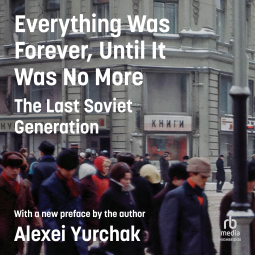
Soviet socialism was based on paradoxes that were revealed by the peculiar experience of its collapse. To the people who lived in that system the collapse seemed both completely unexpected and completely unsurprising. At the moment of collapse it suddenly became obvious that Soviet life had always seemed simultaneously eternal and stagnating, vigorous and ailing, bleak and full of promise. Although these characteristics may appear mutually exclusive, in fact they were mutually constitutive. This book explores the paradoxes of Soviet life during the period of "late socialism" (1960s–1980s) through the eyes of the last Soviet generation.
Focusing on the major transformation of the 1950s at the level of discourse, ideology, language, and ritual, Alexei Yurchak traces the emergence of multiple unanticipated meanings, communities, relations, ideals, and pursuits that this transformation subsequently enabled. His historical, anthropological, and linguistic analysis draws on rich ethnographic material from Late Socialism and the post–Soviet period.
Soviet socialism was based on paradoxes that were revealed by the peculiar experience of its collapse. To the people who lived in that system the collapse seemed both completely unexpected and...
Soviet socialism was based on paradoxes that were revealed by the peculiar experience of its collapse. To the people who lived in that system the collapse seemed both completely unexpected and completely unsurprising. At the moment of collapse it suddenly became obvious that Soviet life had always seemed simultaneously eternal and stagnating, vigorous and ailing, bleak and full of promise. Although these characteristics may appear mutually exclusive, in fact they were mutually constitutive. This book explores the paradoxes of Soviet life during the period of "late socialism" (1960s–1980s) through the eyes of the last Soviet generation.
Focusing on the major transformation of the 1950s at the level of discourse, ideology, language, and ritual, Alexei Yurchak traces the emergence of multiple unanticipated meanings, communities, relations, ideals, and pursuits that this transformation subsequently enabled. His historical, anthropological, and linguistic analysis draws on rich ethnographic material from Late Socialism and the post–Soviet period.
*This page contains affiliate links, so we may earn a small commission when you make a purchase through links on our site at no additional cost to you.
*This page contains affiliate links, so we may earn a small commission when you make a purchase through links on our site at no additional cost to you.
Average rating from 7 members
Readers who liked this book also liked:
Picky
Julie T. Kinn
General Fiction (Adult), New Adult, Women's Fiction