Please wait... This may take a moment.
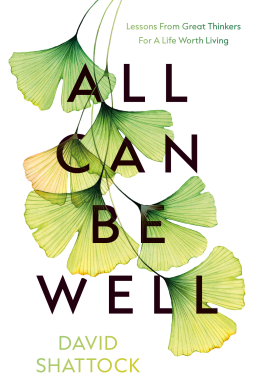
All Can Be Well
Lessons From Great Thinkers For A Life Worth Living
This title was previously available on NetGalley and is now archived.
Pub Date
28 Jun 2026
| Archive Date
4 Sep 2026
Description
Philosophy is the love of wisdom that can provide therapy for the mind. This book synthesises a variety of philosophical ideas into sixteen lessons on how we can acquire eudaimonia - a sense of personal flourishing from the development of our character.
Although we live in an ever-changing political, technological and social landscape, the problems caused by our human nature are much the same as they ever were. The good news is that much of the guidance that we need to help solve them, has already been offered to us by the great thinkers of the past. Throughout history and across the globe, they were often all trying to teach us the same things.
Based on some stark but consoling insights of philosophy, All Can Be Well turns some sobering reflections on the realities of our existence into the ultimately positive message that we can learn to live wiser, calmer and happier lives if we choose to.
Philosophy is the love of wisdom that can provide therapy for the mind. This book synthesises a variety of philosophical ideas into sixteen lessons on how we can acquire eudaimonia - a sense of...
Description
Philosophy is the love of wisdom that can provide therapy for the mind. This book synthesises a variety of philosophical ideas into sixteen lessons on how we can acquire eudaimonia - a sense of personal flourishing from the development of our character.
Although we live in an ever-changing political, technological and social landscape, the problems caused by our human nature are much the same as they ever were. The good news is that much of the guidance that we need to help solve them, has already been offered to us by the great thinkers of the past. Throughout history and across the globe, they were often all trying to teach us the same things.
Based on some stark but consoling insights of philosophy, All Can Be Well turns some sobering reflections on the realities of our existence into the ultimately positive message that we can learn to live wiser, calmer and happier lives if we choose to.
A Note From the Publisher
David Shattock was a systems analyst in the IT industry before becoming a mathematics teacher. His previous book, Presenting Children To Maths: Stronger Character For Better Learning, outlines an educational philosophy to support the learning of mathematics in school. He lives in London.
David Shattock was a systems analyst in the IT industry before becoming a mathematics teacher. His previous book, Presenting Children To Maths: Stronger Character For Better Learning, outlines an...
A Note From the Publisher
David Shattock was a systems analyst in the IT industry before becoming a mathematics teacher. His previous book, Presenting Children To Maths: Stronger Character For Better Learning, outlines an educational philosophy to support the learning of mathematics in school. He lives in London.
Available Editions
| EDITION |
Ebook |
| ISBN |
9781806347933 |
| PRICE |
£2.99 (GBP)
|
| PAGES |
360
|
Available on NetGalley
NetGalley Reader
(EPUB)
NetGalley Shelf App
(EPUB)
Send to Kindle (EPUB)
Send to Kobo (EPUB)
Download (EPUB)
Additional Information
Available Editions
| EDITION |
Ebook |
| ISBN |
9781806347933 |
| PRICE |
£2.99 (GBP)
|
| PAGES |
360
|
Available on NetGalley
NetGalley Reader
(EPUB)
NetGalley Shelf App
(EPUB)
Send to Kindle (EPUB)
Send to Kobo (EPUB)
Download (EPUB)
Average rating from 2 members
Featured Reviews
 Media/Journalist 16509
3 stars
3 stars
3 stars
3 stars
3 stars
I read most of this book intently but finally gave up because it stopped being just dull and moved on to being also preachy and condescending. Each chapter is a life lesson based on famous philosophers, leaders and occasionally scientists throughout time, based on quotes on that subject by a variety of these (generally) men. These topics include things like rationality, doubt and solitude. The book sort of sells itself as a self help book but it’s more of a self improvement book, like how to be the most worthy human according to people like Benjamin Franklin, Nietzsche and Plato. The goal here is not to be happier but to be a better member of society.
I was already familiar with most of the quotes that provided the guideposts of each chapter and I didn’t really enjoy the writing, but I continued with the goal of reading through to the end anyway. The chapter on rationality really turned me off though, with the way he spoke about flat earthers and then the way he spoke about people who believe in astrology. While I don’t believe in either of these myself, the dismissal of these people and repeated reference to their stupidity was really off-putting for me. I have certainly met men who treated some of my opinions and beliefs with this same arrogant mocking, and I also know and love people who do believe in astrology whom I believe are still intelligent people worthy of respect whether I personally happen to believe in astrology or not.
From there, he went into the education of children and proceeded to discount great quotes that I happened to agree with about giving children freedom and autonomy in their learning, saying instead that we need to be sure to teach children what to think. That was the point that I really felt like I was not willing to spend any more hours in this opinionated man’s head, so to speak.
We also have to talk about who gets to be included as great thinkers. The quotes are easily 99% by men, and generally men from the United States, Europe, ancient Greece, ancient Rome and Japan. The great thinkers from throughout time apparently were almost always middle class white men. The absolutely appalling lack of wisdom from women, people of color and much of the earth made this book better suited for publishing in previous centuries in my opinion.
This is a well compiled collection of thoughts that I think most of us are already moderately familiar with, but I think it was largely a missed opportunity for me.
I read a digital review ARC of this book via netgalley.
3 stars
3 stars
3 stars
3 stars
3 stars
 Helen H, Reviewer
4 stars
4 stars
4 stars
4 stars
4 stars
I did a philosophy degree but it was a long time ago now and it was really nice to immerse myself back into it. It was quite a whirlwind in that it covers a lot of people and a lot of thinking in a relatively small book. The conclusion captures the essence of philosophy very well. I think this book is of interest to anyone who is thinking about human nature. Definitely worth a read. Thanks to NetGalley and Troubador Publishing for the ARC.
4 stars
4 stars
4 stars
4 stars
4 stars
Featured Reviews
Media/Journalist 16509
3 stars
3 stars
3 stars
3 stars
3 stars
I read most of this book intently but finally gave up because it stopped being just dull and moved on to being also preachy and condescending. Each chapter is a life lesson based on famous philosophers, leaders and occasionally scientists throughout time, based on quotes on that subject by a variety of these (generally) men. These topics include things like rationality, doubt and solitude. The book sort of sells itself as a self help book but it’s more of a self improvement book, like how to be the most worthy human according to people like Benjamin Franklin, Nietzsche and Plato. The goal here is not to be happier but to be a better member of society.
I was already familiar with most of the quotes that provided the guideposts of each chapter and I didn’t really enjoy the writing, but I continued with the goal of reading through to the end anyway. The chapter on rationality really turned me off though, with the way he spoke about flat earthers and then the way he spoke about people who believe in astrology. While I don’t believe in either of these myself, the dismissal of these people and repeated reference to their stupidity was really off-putting for me. I have certainly met men who treated some of my opinions and beliefs with this same arrogant mocking, and I also know and love people who do believe in astrology whom I believe are still intelligent people worthy of respect whether I personally happen to believe in astrology or not.
From there, he went into the education of children and proceeded to discount great quotes that I happened to agree with about giving children freedom and autonomy in their learning, saying instead that we need to be sure to teach children what to think. That was the point that I really felt like I was not willing to spend any more hours in this opinionated man’s head, so to speak.
We also have to talk about who gets to be included as great thinkers. The quotes are easily 99% by men, and generally men from the United States, Europe, ancient Greece, ancient Rome and Japan. The great thinkers from throughout time apparently were almost always middle class white men. The absolutely appalling lack of wisdom from women, people of color and much of the earth made this book better suited for publishing in previous centuries in my opinion.
This is a well compiled collection of thoughts that I think most of us are already moderately familiar with, but I think it was largely a missed opportunity for me.
I read a digital review ARC of this book via netgalley.
3 stars
3 stars
3 stars
3 stars
3 stars
Helen H, Reviewer
4 stars
4 stars
4 stars
4 stars
4 stars
I did a philosophy degree but it was a long time ago now and it was really nice to immerse myself back into it. It was quite a whirlwind in that it covers a lot of people and a lot of thinking in a relatively small book. The conclusion captures the essence of philosophy very well. I think this book is of interest to anyone who is thinking about human nature. Definitely worth a read. Thanks to NetGalley and Troubador Publishing for the ARC.
4 stars
4 stars
4 stars
4 stars
4 stars